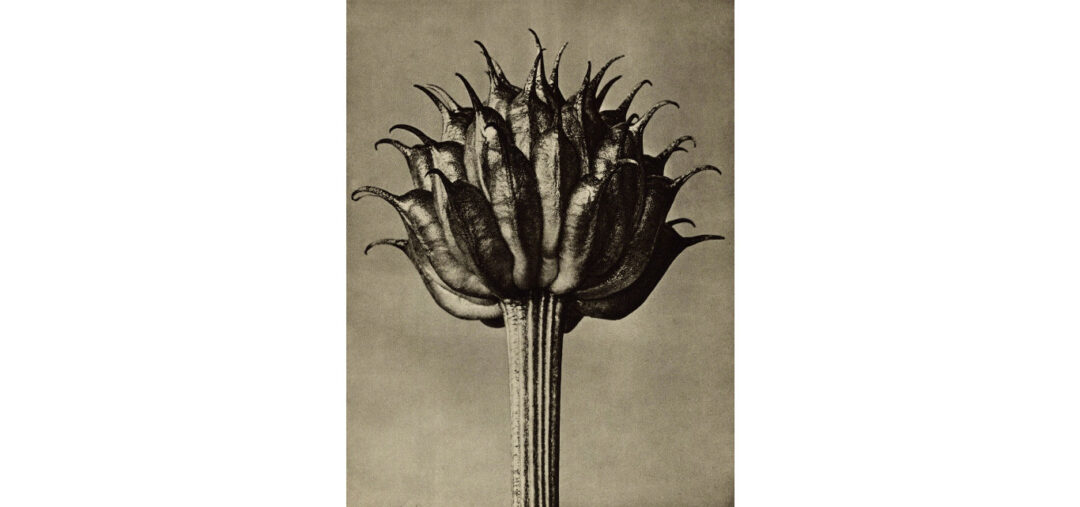
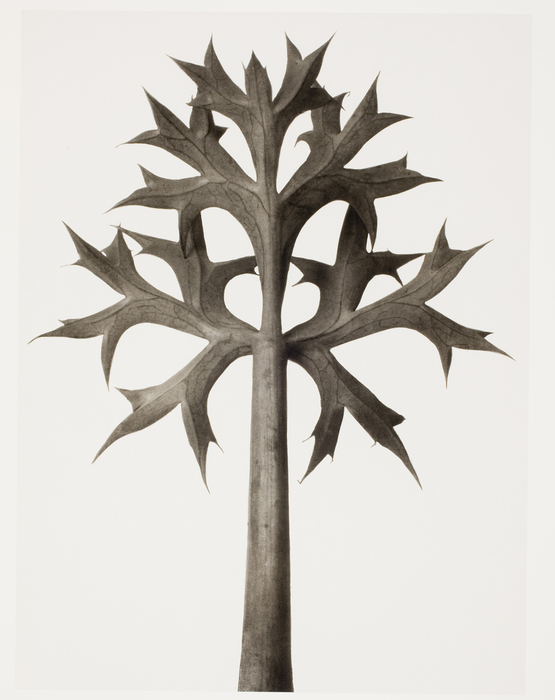
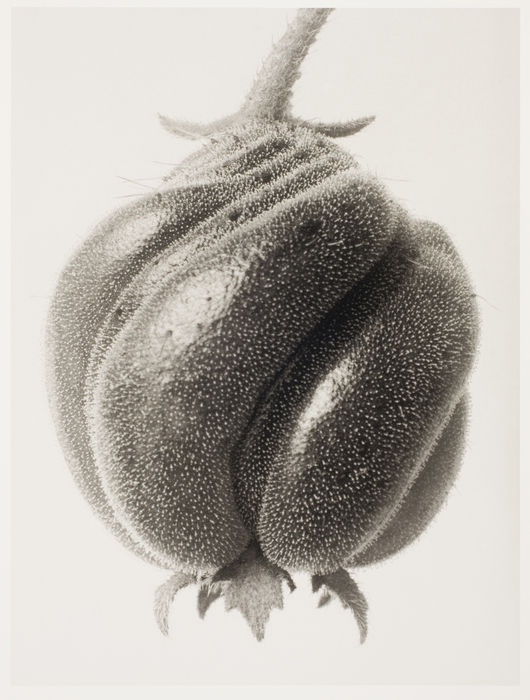
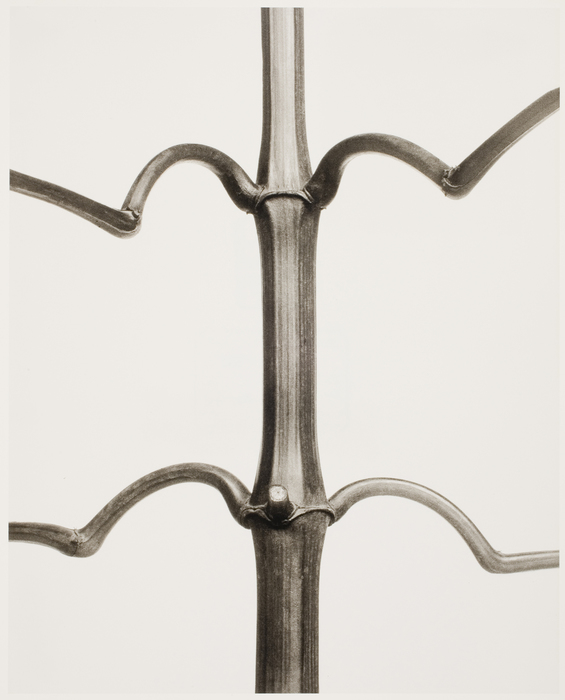
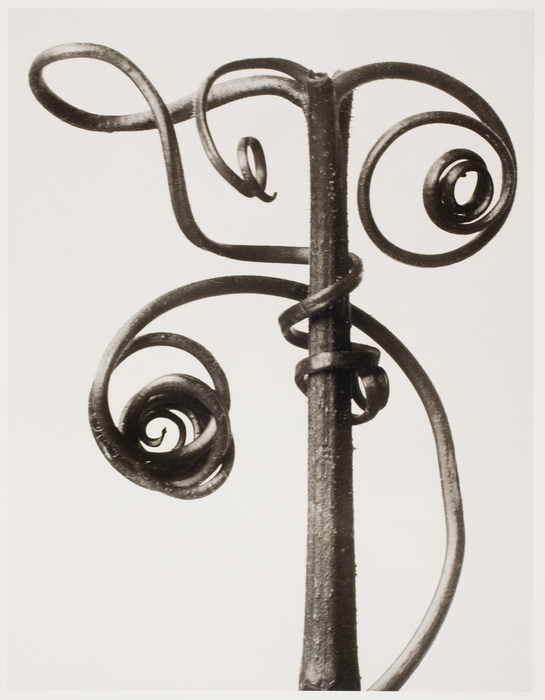
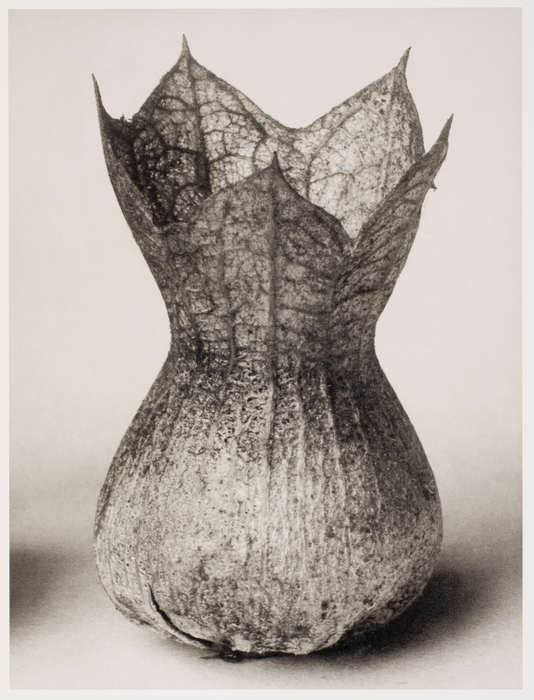
Karl Blossfeldt was a German photographer, sculptor, and teacher born in 1865 in Schielo, in the Harz Mountains. Originally trained in sculpture and iron casting, he began photographing plants in the 1890s while assisting a decorative artist in Italy. From 1898 he taught at the Kunstgewerbeschule in Berlin, using his photographs as teaching tools for design students. His major breakthrough came in 1928 with the publication of Urformen der Kunst (Art Forms in Nature), which brought him international recognition late in life. His images are famous for their crisp black-and-white detail and structural clarity.
- Primary Genres: Botanical, Macro, Fine Art, Documentary.
- Primary Photography Styles: Straight photography – sharp, objective black-and-white close-ups with neutral backgrounds and precise detail.
- Key Message: Blossfeldt believed that nature provides the fundamental forms for all art and design. Through magnified plant studies, he revealed the sculptural beauty and architectural logic hidden in everyday flora, showing that science and aesthetics can work together.
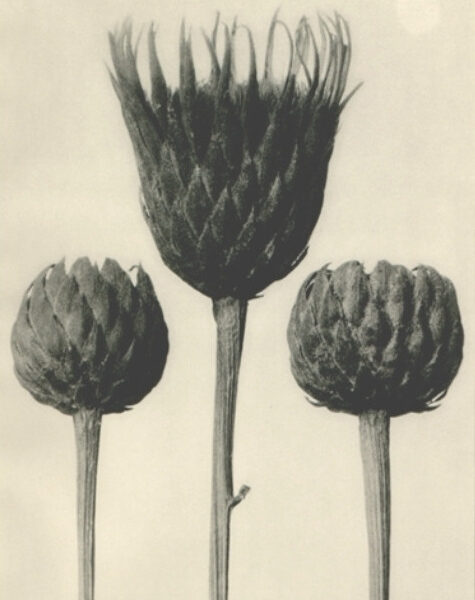
Blossfeldt’s most common subjects were plant stems, leaves, seed pods, tendrils, and flowers, often photographed at 4x to 30x magnification. His unique aesthetic lies in extreme sharpness, high contrast between the plant and plain background, and a minimalist approach that emphasises structure, texture, and symmetry. He treated plants like architectural forms, highlighting repeating patterns that could inspire designers and sculptors. He worked almost entirely with natural light, usually soft skylight in his studio, and used a large-format camera he modified himself with custom lenses for extreme close-ups. Everything was shot on glass plates with a tripod for maximum sharpness. In the darkroom he produced gelatin silver prints, carefully controlling contrast to retain fine detail without softening the edges. His two main books — Urformen der Kunst (1928) and Wundergarten der Natur (1932) — remain the best presentation of his work and influenced modernist design movements.
For intermediate photographers, Blossfeldt is an excellent example of straight photography and the New Objectivity movement. Unlike pictorialism, which favoured soft focus and painterly effects, he embraced the camera’s ability to record precise detail. His approach shows the importance of understanding light direction, depth of field, and background control in macro work. Even today, his method proves you do not need complex equipment — just patience, good observation, and technical discipline.
- Accolades:
- International success with Urformen der Kunst (1928)
- Major influence on the Bauhaus and New Objectivity movement
- Frequent exhibitions at leading institutions such as Whitechapel Gallery
- Trivia:
- He built and modified his own large-format cameras for macro photographs.
- Collected over 6,000 plant negatives during more than 30 years of work.
- Was inspired by Goethe’s writings on nature and morphology.
Lessons from this Photographer:
Blossfeldt teaches us to slow down and really look at ordinary subjects. By isolating plants against clean backgrounds and using strong side or top light, he turned simple weeds into sculptural forms. You can apply this by practising macro or close-up photography with natural light only, paying special attention to background simplicity and edge sharpness. Another key lesson is patience — he worked on his archive for decades before publishing. Finally, remember that strong concepts (like linking nature to design) often matter more than technical tricks. Try treating everyday objects as architectural studies and see how it changes the way you compose images.
Website and Portfolio:
YouTube References:
- “Karl Blossfeldt” by The Art of Photography – https://www.youtube.com/watch?v=aOc2aUL1834
Citations:
- Britannica Biography: https://www.britannica.com/biography/Karl-Blossfeldt
- Wikipedia (Karl Blossfeldt): https://en.wikipedia.org/wiki/Karl_Blossfeldt
- MoMA Collection: https://www.moma.org/collection/artists/24413
- Whitechapel Gallery Exhibition: https://www.whitechapelgallery.org/exhibitions/karl-blossfeldt/
- ICP Archive: https://www.icp.org/browse/archive/constituents/karl-blossfeldt