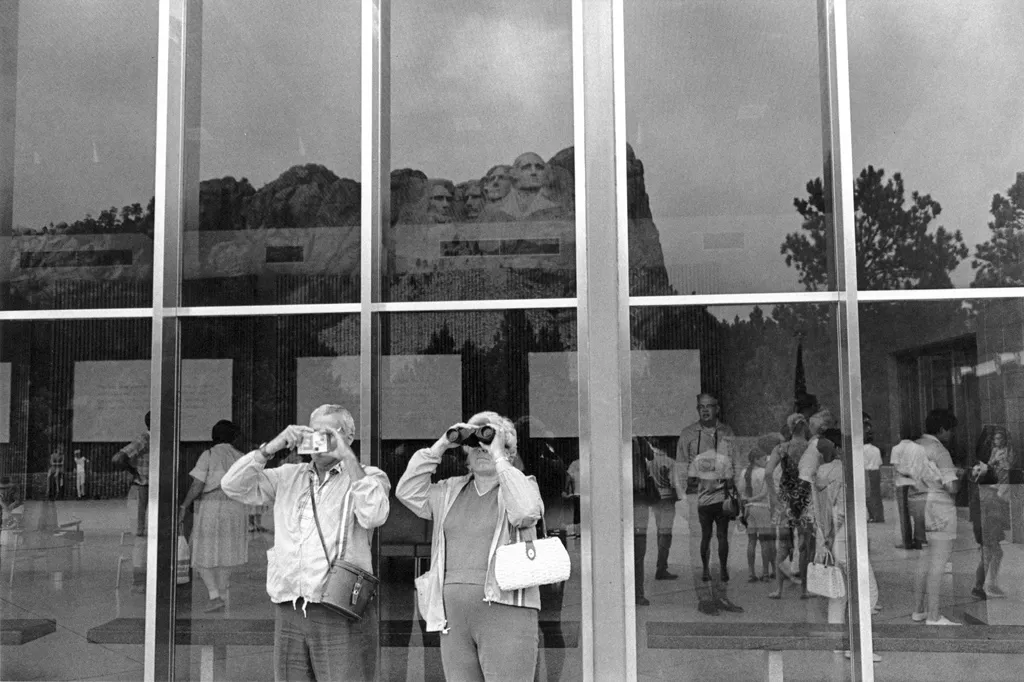
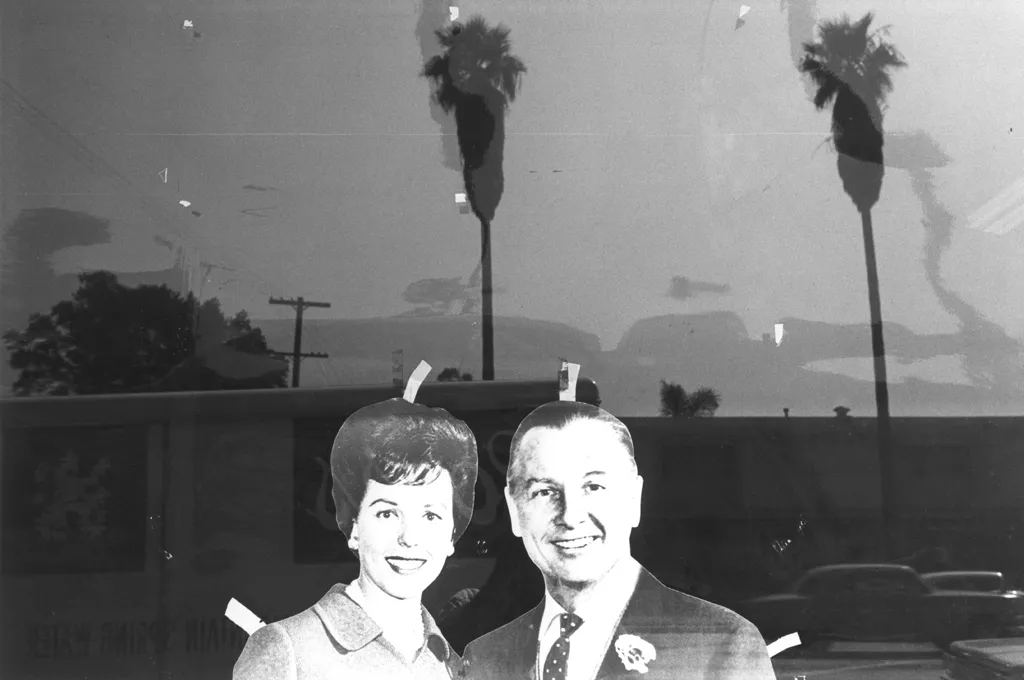
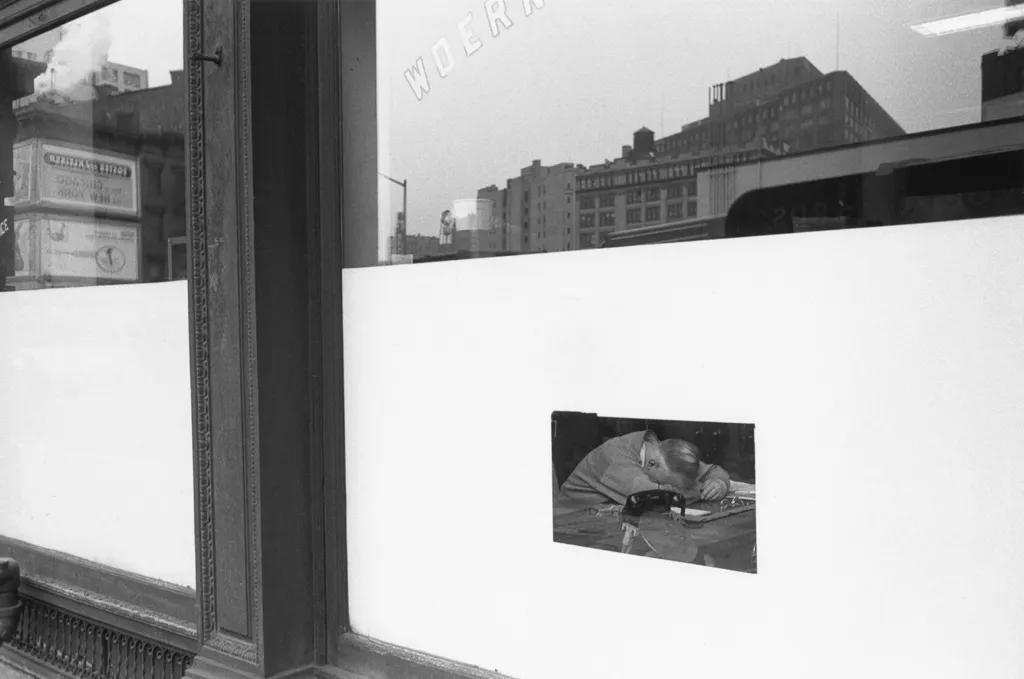
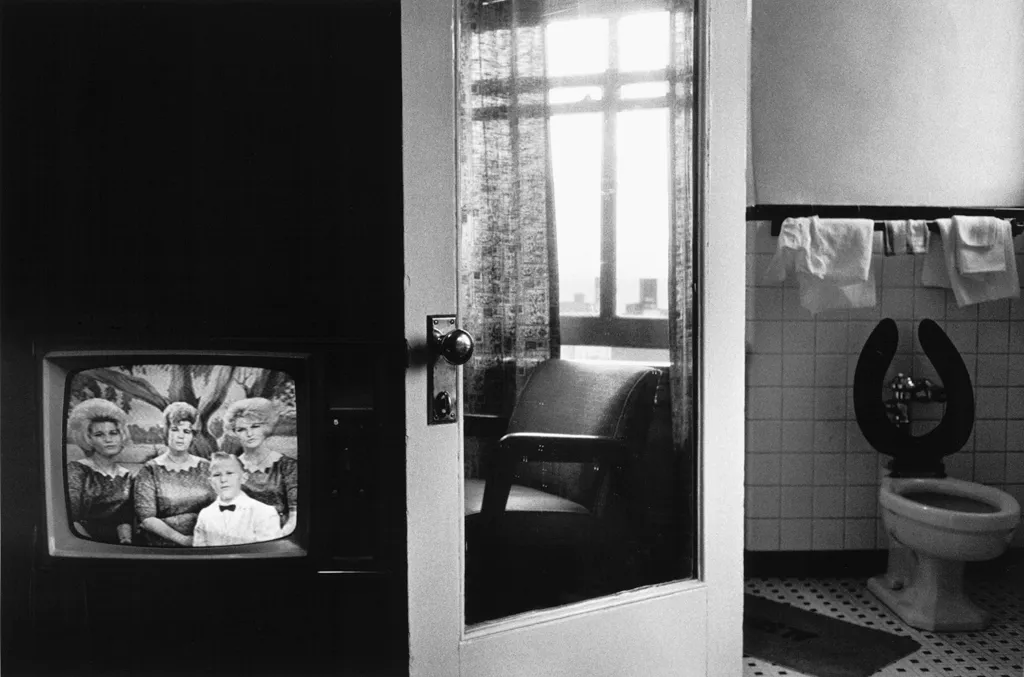
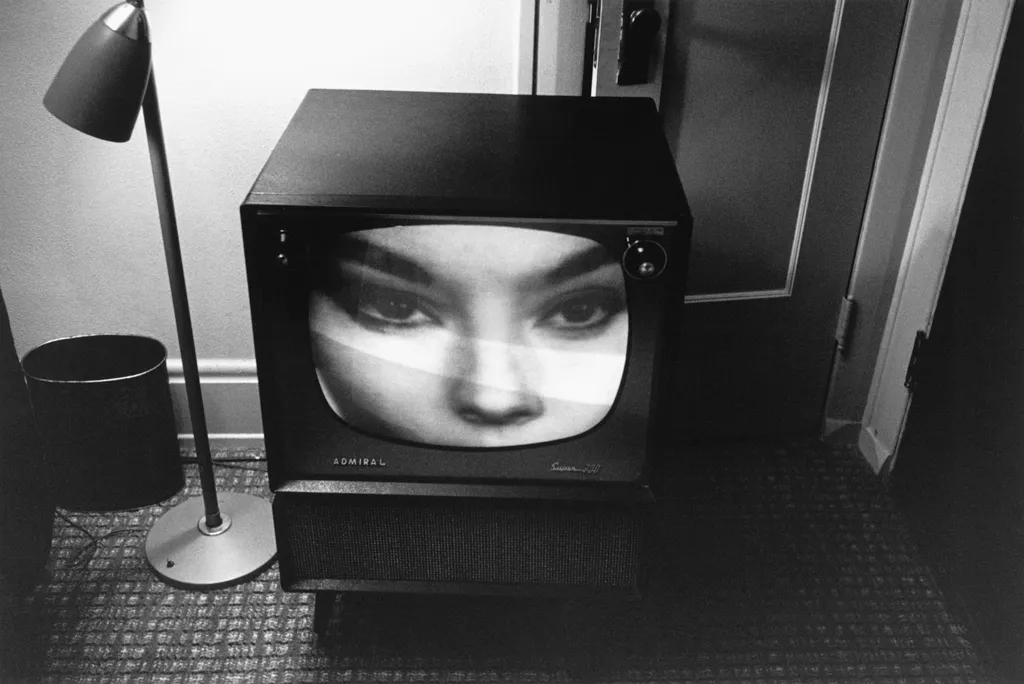
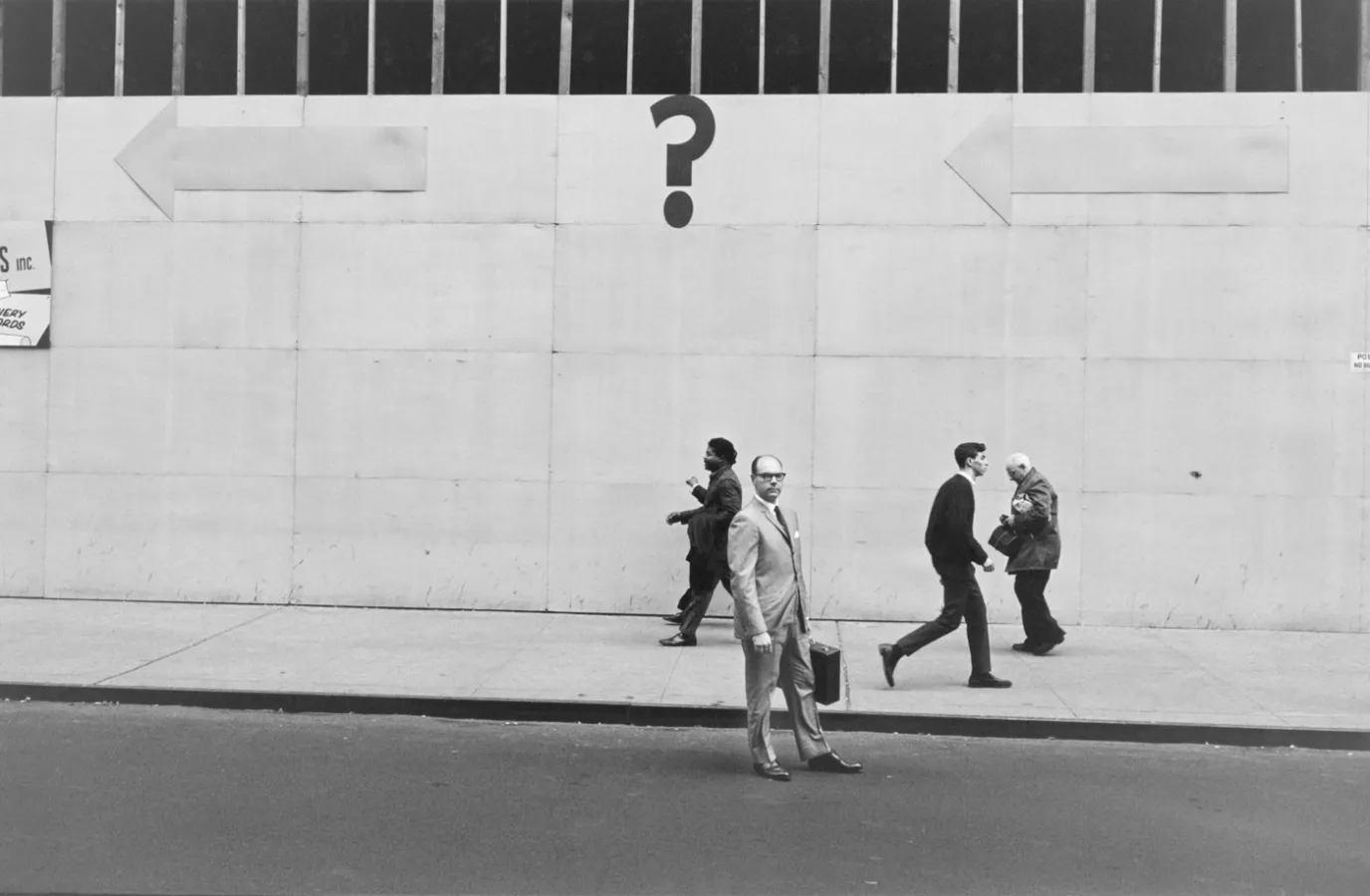
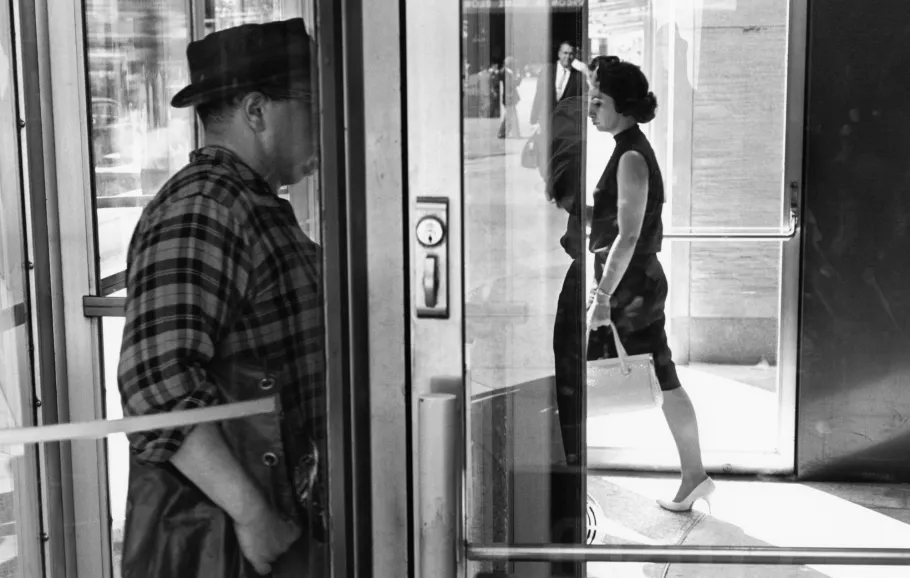
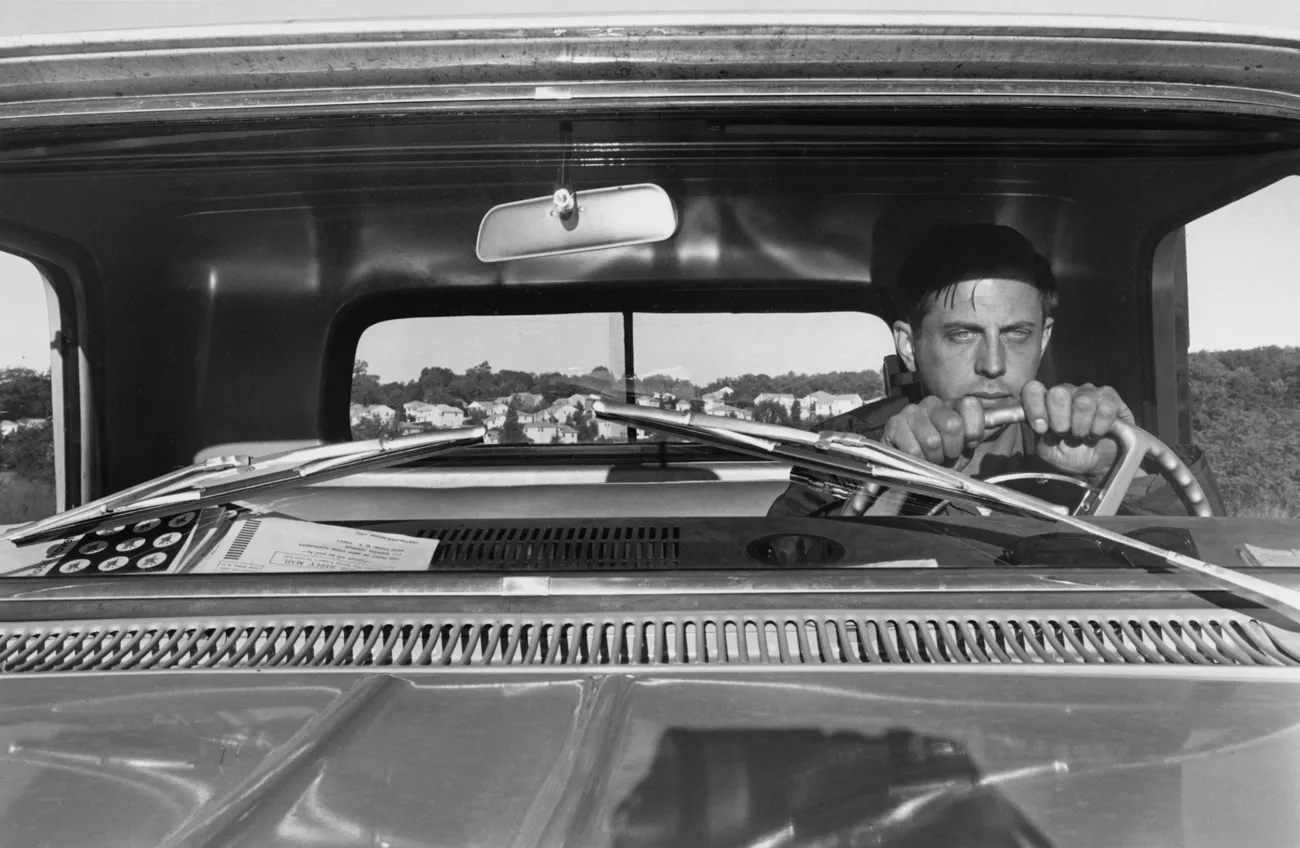
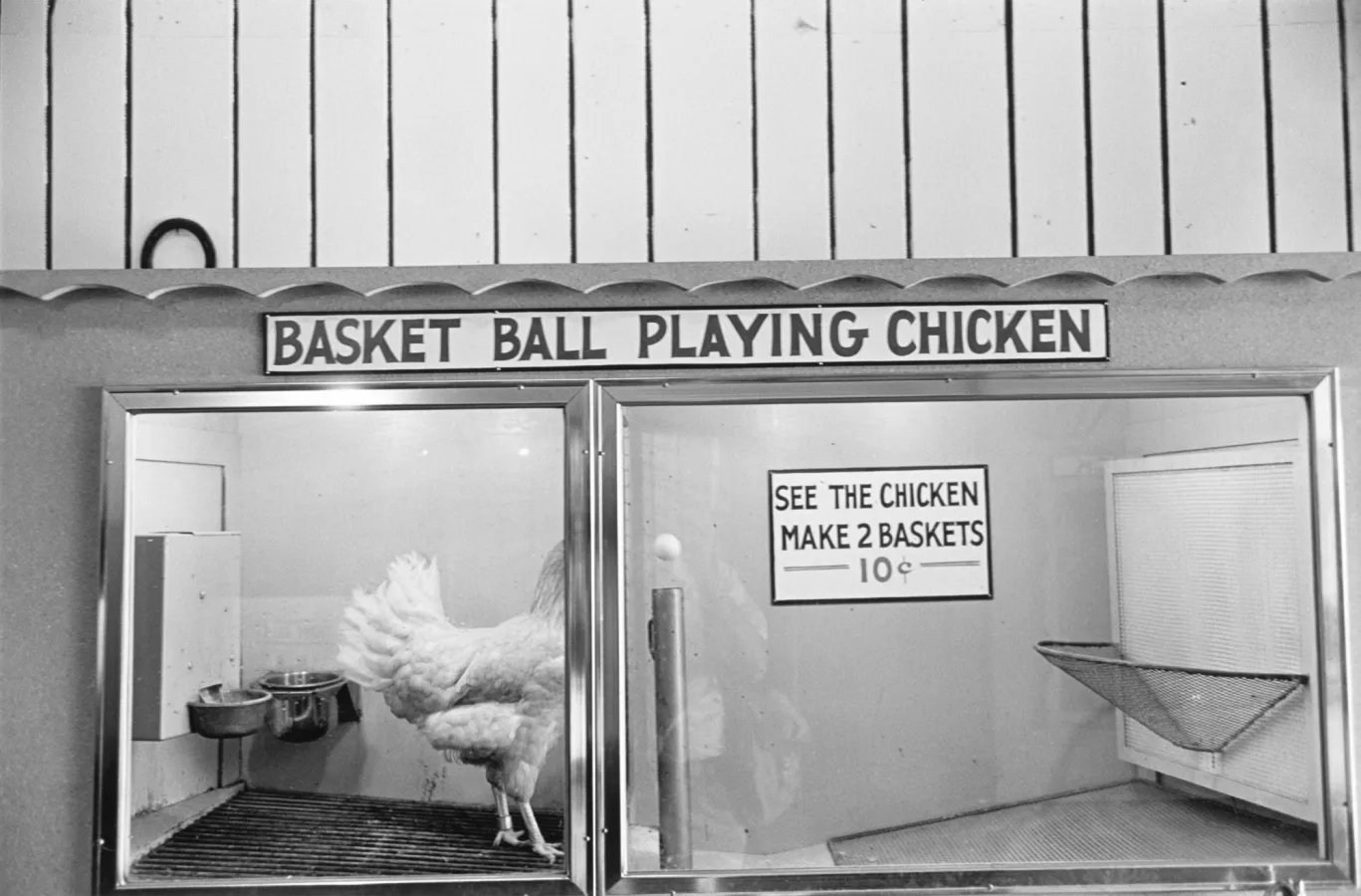
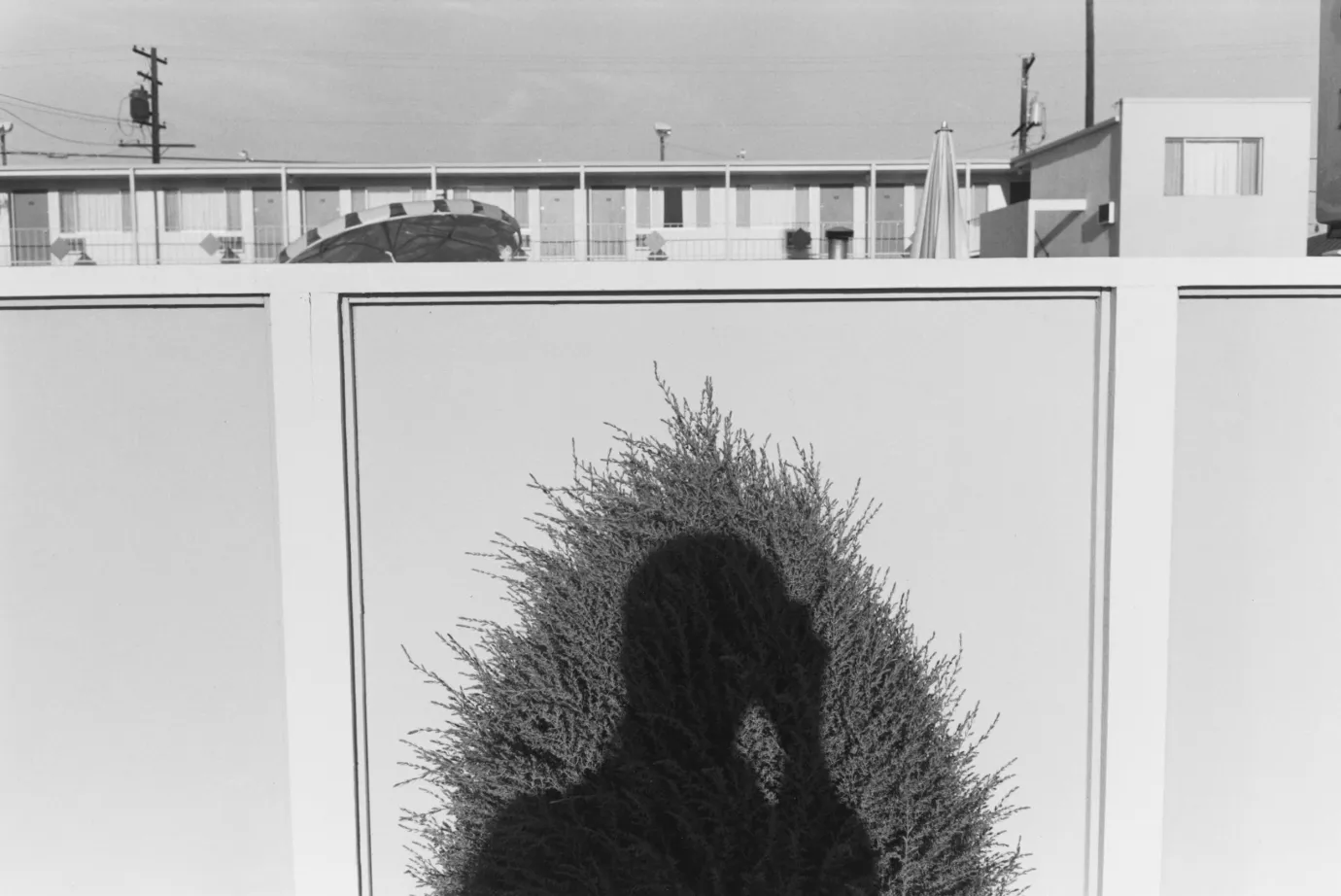
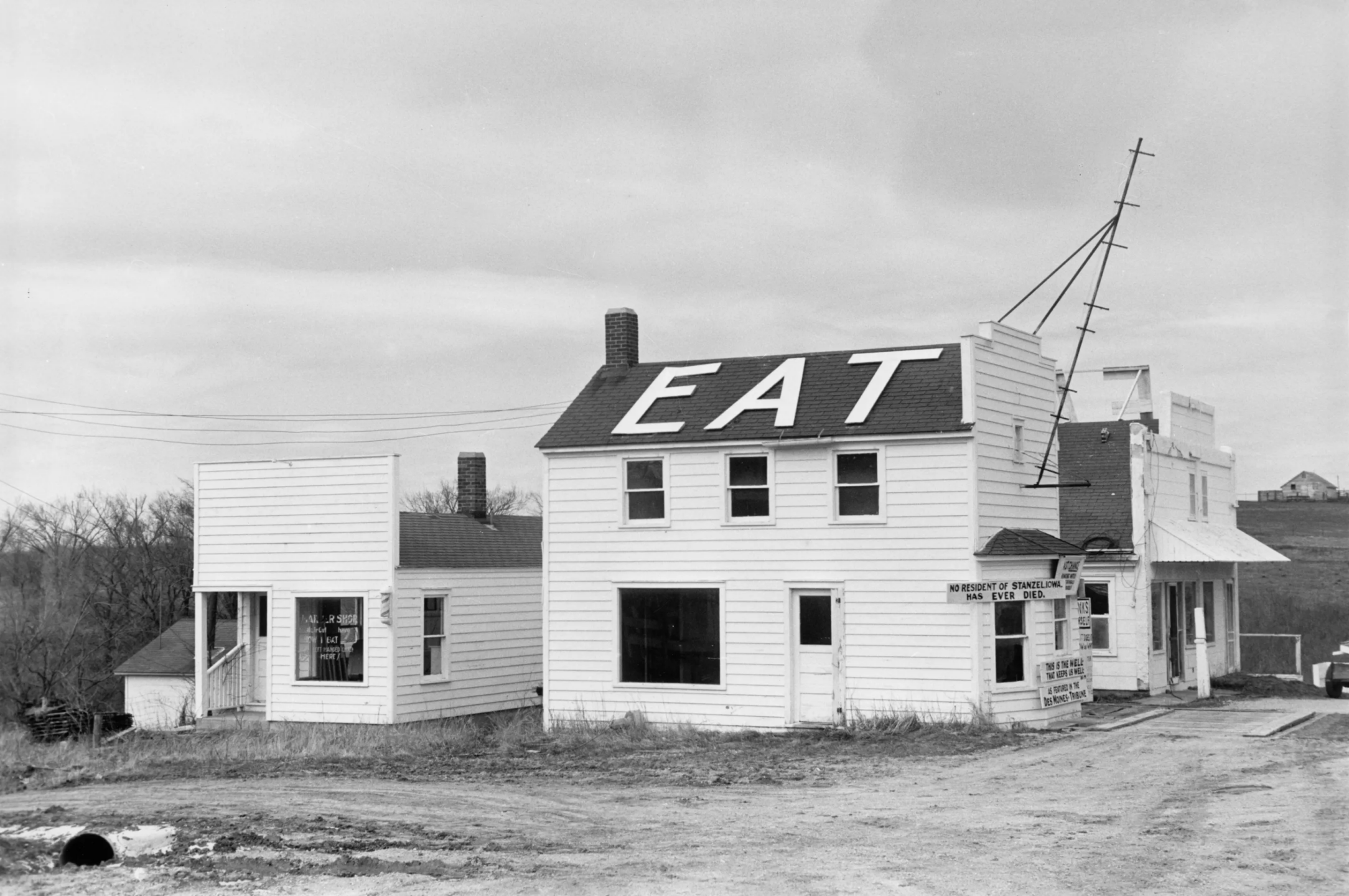
Lee Friedlander, born in 1934 in Aberdeen, Washington, developed an interest in photography as a teenager. He studied briefly at Art Center College of Design in California before moving to New York in 1956, where he began freelancing and photographing jazz musicians. Over his more than 70-year career, he has become one of the most influential figures in American photography. His black-and-white images stand out for their dense, layered compositions full of reflections, signs, and overlapping elements that capture the chaos of everyday life.
- Primary Genres: Street, Documentary, Social Landscape
- Primary Photography Style: Straight photography in black and white – complex, layered compositions with high information density, using reflections, frames-within-frames, and visual interruptions for a chaotic yet organised feel.
- Key Message: Friedlander’s work explores the complexity and fragmentation of modern American life. He shows how people interact with their urban environments in unposed, often humorous or ironic ways, without imposing judgement or simple narratives. His images reflect the energy and disorder of the social landscape.
Friedlander’s most common subjects include city streets, shop windows, pedestrians, cars, monuments, and trees. He works primarily with film cameras – early on with Leica 35mm rangefinders (often a 35mm lens) and later with medium format Hasselblad Superwide cameras for greater sharpness and depth. He uses natural light only, no flash, and shoots handheld for speed and spontaneity. Printing is done in the traditional darkroom on gelatin silver paper, where he controls contrast carefully while preserving grain and detail. Many of his projects have been published as substantial books, which remain central to how his work is experienced.
For intermediate photographers, Friedlander offers a masterclass in compositional complexity. Unlike clean, minimalist street work, his images embrace “all-over” framing where multiple elements compete for attention. This teaches the value of working with what’s in front of you rather than simplifying the scene. His long-term commitment to film also highlights the discipline of shooting with intention, as each frame costs time and money compared to digital. Studying his books helps learners understand how individual images gain power when edited into coherent series.
- Accolades:
- Three Guggenheim Fellowships (1960, 1962, 1977)
- MacArthur Fellowship (1990)
- Hasselblad Award (2005)
- Major retrospectives at MoMA and other leading institutions
- Trivia:
- He has photographed extensively from car windows throughout his career.
- He photographed many legendary jazz musicians early in his career for Atlantic Records.
- He continues working into his 90s, including personal projects during periods of limited mobility.
Lessons from this Photographer:
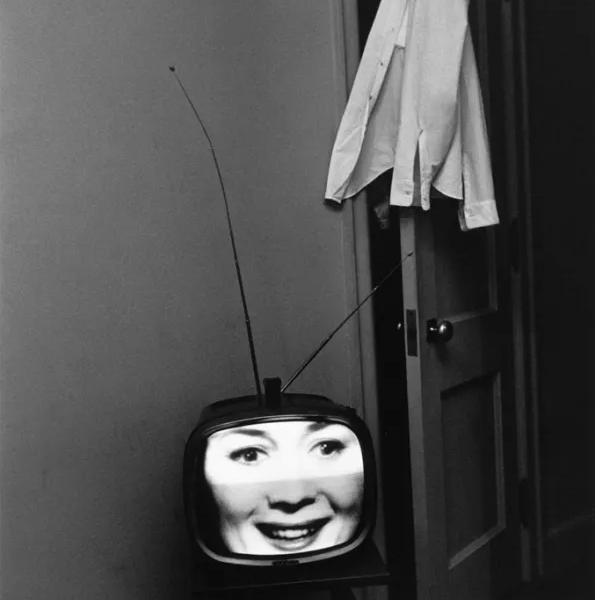
Friedlander demonstrates that complexity can be more honest than simplicity in street photography. By layering reflections, signs, and people, he shows how to embrace the messiness of real life instead of waiting for clean moments. Photographers can apply this by practising tighter framing in busy environments and learning to see multiple subjects at once. His consistency over decades reminds us that developing a recognisable voice takes time and obsessive looking. Try shooting a series from one consistent viewpoint, like your car, to train your eye for unexpected compositions.
Website and Portfolio:
-
- Website: https://fraenkelgallery.com/artists/lee-friedlander
- Luhring Augustine: https://www.luhringaugustine.com/artists/lee-friedlander
Citations:
- Britannica Biography: https://www.britannica.com/biography/Lee-Friedlander
- Wikipedia (cross-referenced): https://en.wikipedia.org/wiki/Lee_Friedlander
- ICP Archive: https://www.icp.org/browse/archive/constituents/lee-friedlander