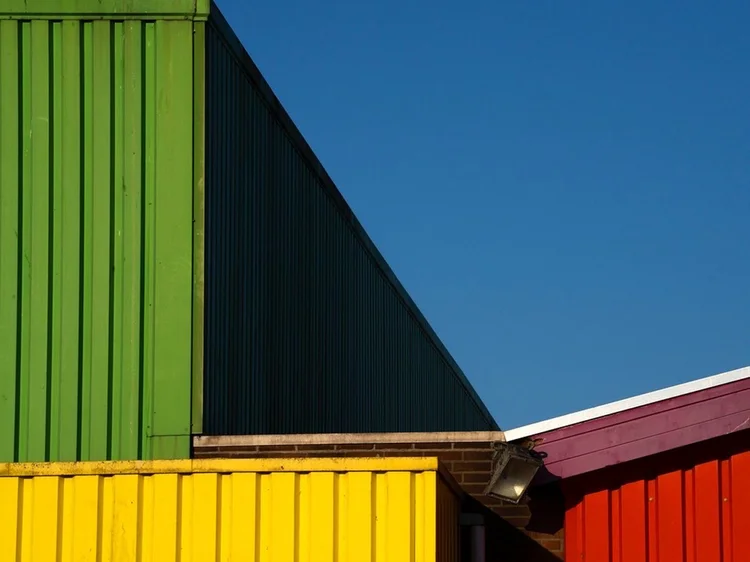
We’ve written another article on Stuart’s street photography, but his architecture is so stunning that we had to do a separate post on it! Matt Stuart was born in 1974 in Harrow, North West London, and began his photography career in the late 1990s after working as an assistant. Following our previous article on his humorous street photography, this piece focuses on his Industrieweg series, a departure from urban candid shots. Discovered by accident during lockdown in 2020 while en route to buy astroturf, the series emerged over a year of visits to this industrial area in Amsterdam. Key milestones include its presentation on his website under books, alongside titles like All That Life Can Afford (2016) and Into the Fire (2020). Visual traits feature bold, vibrant colours of warehouses against clear skies and stark shadows or reflections for contrast.
- Primary Genres: Architecture, Abstract
- Primary Photography Style: Straight Photography: observational captures of industrial structures without intervention; Expressionism: emphasis on colour contrasts and light play for emotional, therapeutic effect.
- Key Message: Through the Industrieweg series, Matt Stuart explores solitude and renewal during lockdown, transforming a deserted industrial space into a source of vitality. His images highlight how light and bold colours can evoke life and positivity in empty environments.
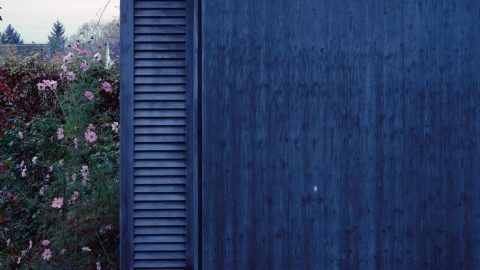
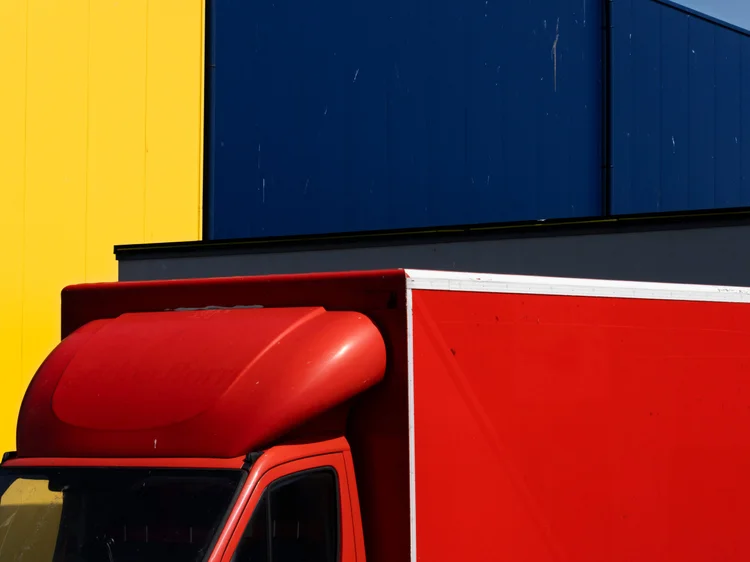
Matt Stuart’s Industrieweg series centres on subjects like corrugated warehouses in vivid hues such as green, yellow, orange, and red, often with elements like fences, doors, puddles reflecting structures, and hanging light bulbs. The aesthetic focuses on high colour saturation and contrasts, with textures from weathered metal and shadows creating abstract forms against blue skies. Techniques include shooting in natural early morning or late afternoon light to enhance vibrancy, using a Leica camera for precise composition, handheld for flexibility. He avoids flash, relying on timing to capture light interactions, such as shadows mimicking shapes or reflections in water puddles. Editing likely involves Lightroom adjustments to boost colours and contrast, maintaining a clean, unmanipulated look.
For intermediate photographers, Stuart’s style in this series illustrates how to shift from people-focused street work to architecture, using natural light to add depth—early light softens edges, while late light casts dramatic shadows. He employs digital tools for review but draws from film principles like deliberate framing to avoid waste. Concepts such as the zone system help manage exposure in high-contrast scenes, teaching how to balance bright colours with dark areas for emotional impact. This approach encourages exploring empty spaces for abstract compositions, honing patience in waiting for optimal light.
Presentation of the series is through his website gallery, with images available as prints in various sizes. It serves as a therapeutic project, compiled into a book-like format under his publications, allowing viewers to appreciate the scale of colours in physical or digital form. Overall, Industrieweg marks a personal evolution, showing how constraints like lockdown can inspire new directions in photography.
- Accolades:
- Nominee member of Magnum Photos (2016)
- Member of In-Public street photography collective (2001)
- Work acquired for the permanent collection of the Museum of London
- Featured in survey books like Street Photography Now.
- Trivia:
- Discovered Industrieweg by accident due to wrong directions from his partner
- Visited the site most mornings at 6 am during lockdown
- Founded Plague Press in 2016 to publish fine photography books
- Often walks up to 20 km a day, a habit that aided scouting empty industrial areas.
Lessons from this Photographer:
The Industrieweg series highlights the unique value of seeking solace in photography during isolation, teaching photographers to find beauty in mundane or deserted places by focusing on colour and light interactions. A key lesson is embracing serendipity and persistence, as accidental discoveries can lead to profound projects—apply this by exploring local industrial zones with a camera ready for changing light conditions. Shift mindset to appreciate abstract elements over human subjects, using minimal post-processing to let natural vibrancy tell the story, encouraging experimentation with timing to capture therapeutic, uplifting images.
Citations:
- Photographer’s Official Website: https://www.mattstuart.com/industrieweg,
- Wikipedia Entry: https://en.wikipedia.org/wiki/Matt_Stuart_(photographer),
- LensCulture Interview: https://www.lensculture.com/articles/matt-stuart-time-patience-repetition-the-ingredients-of-special-street-photography,
- Colossal Article: https://www.thisiscolossal.com/2022/07/think-like-a-street-photographer-matt-stuart/.