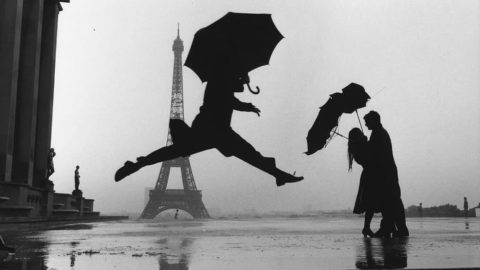
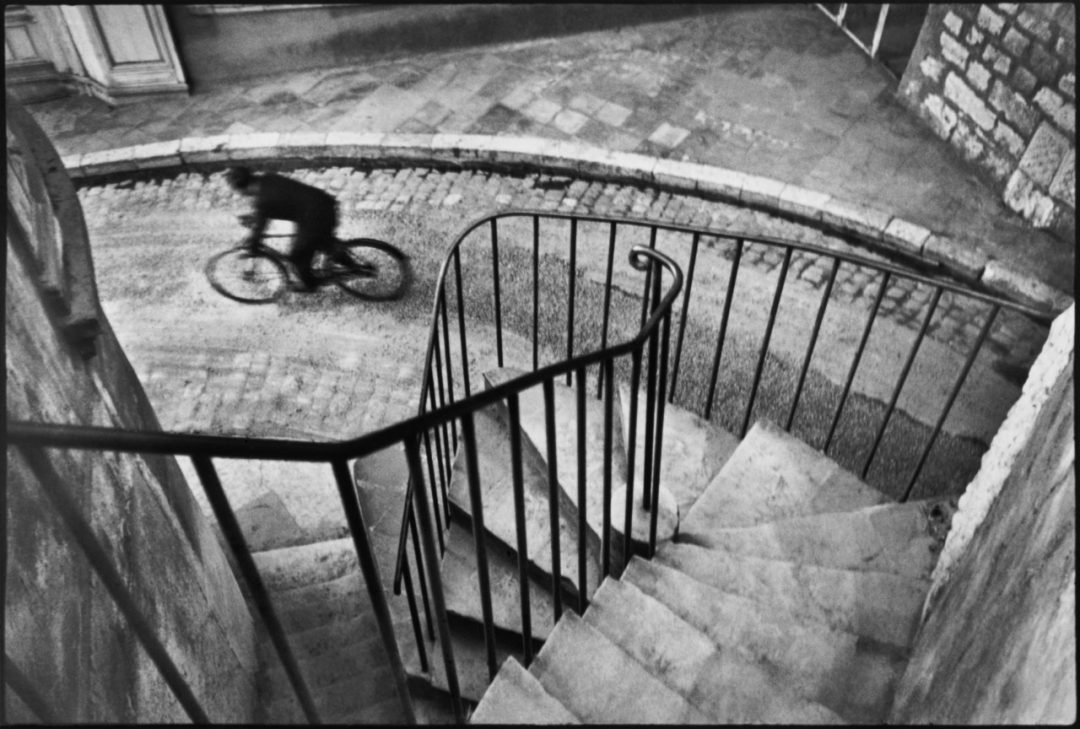
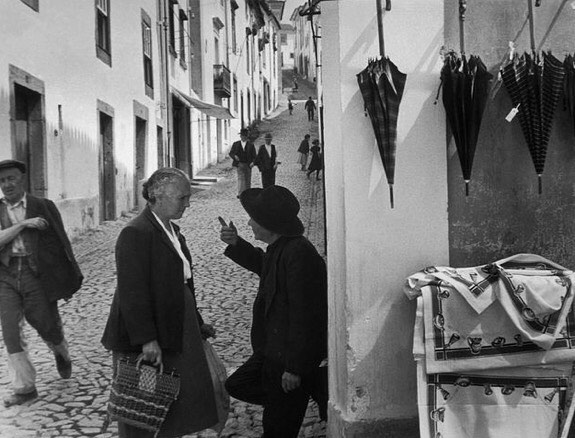
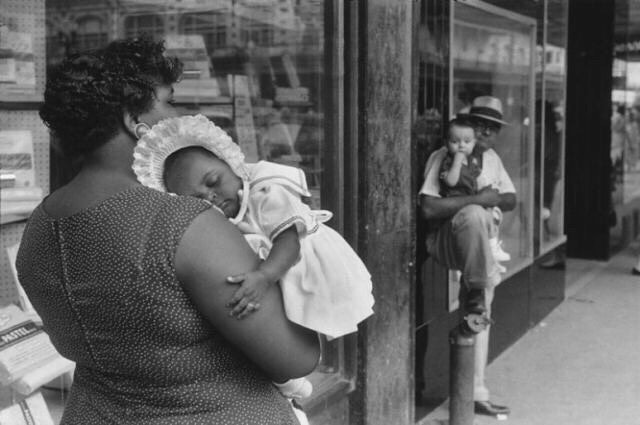
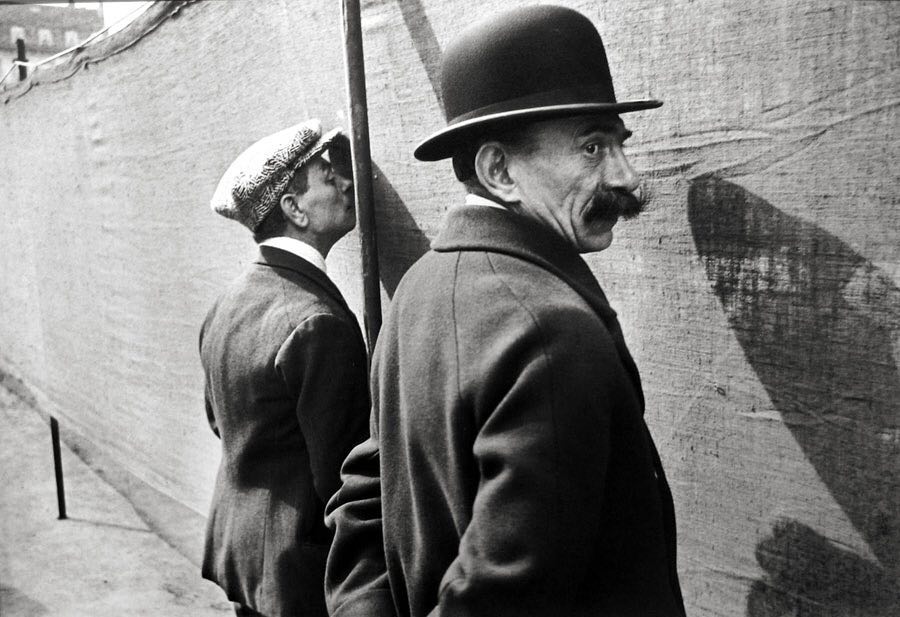
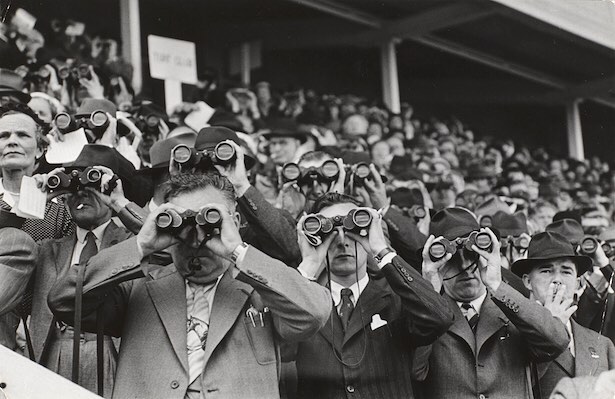
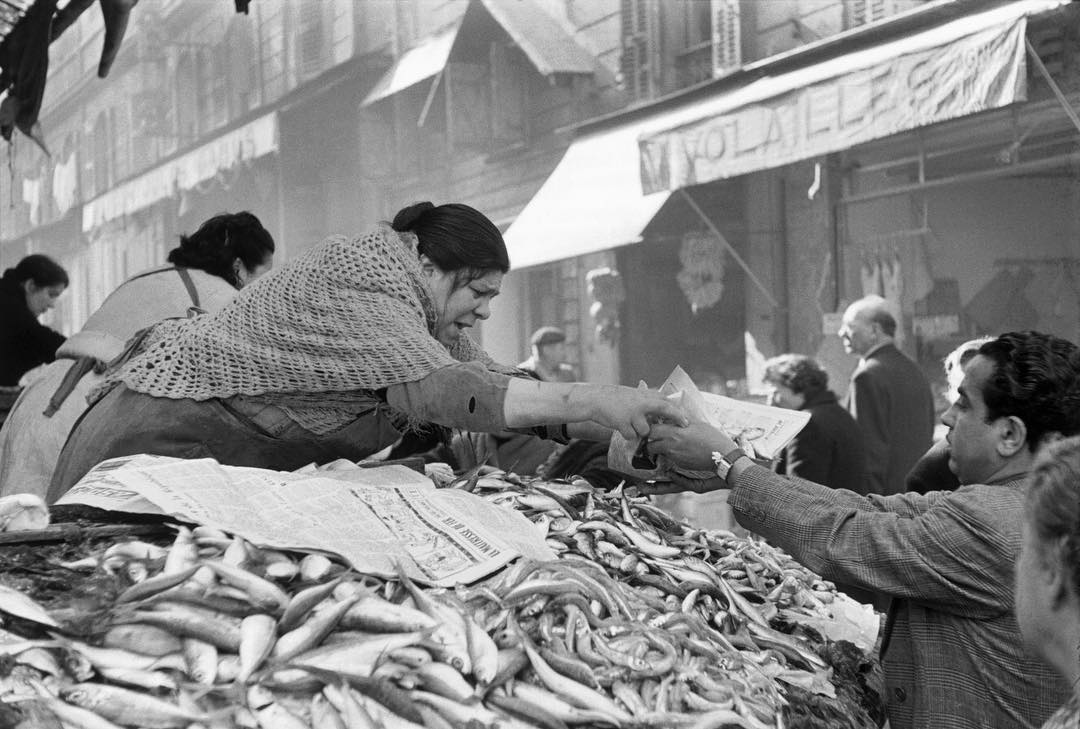
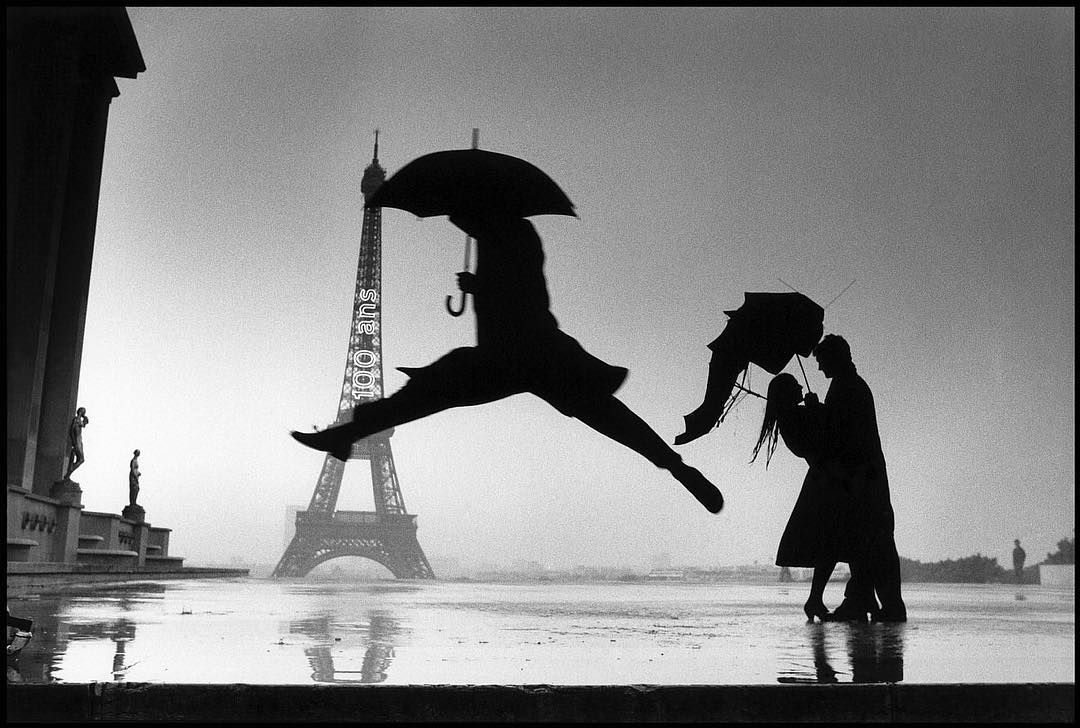
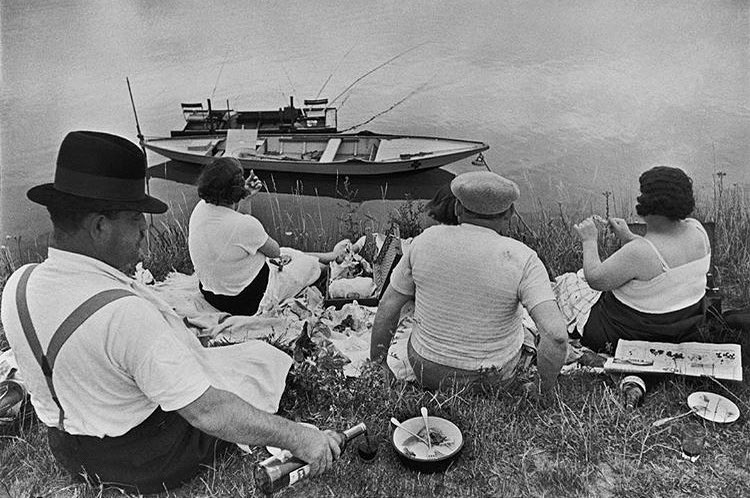
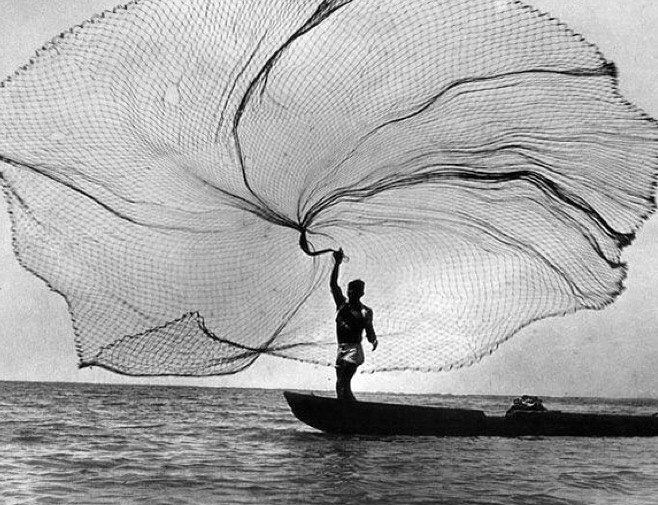
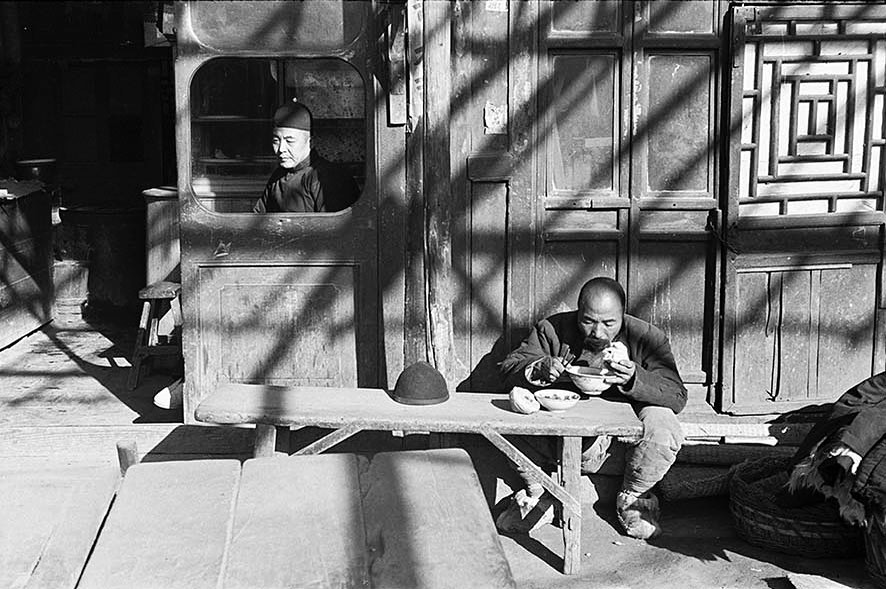
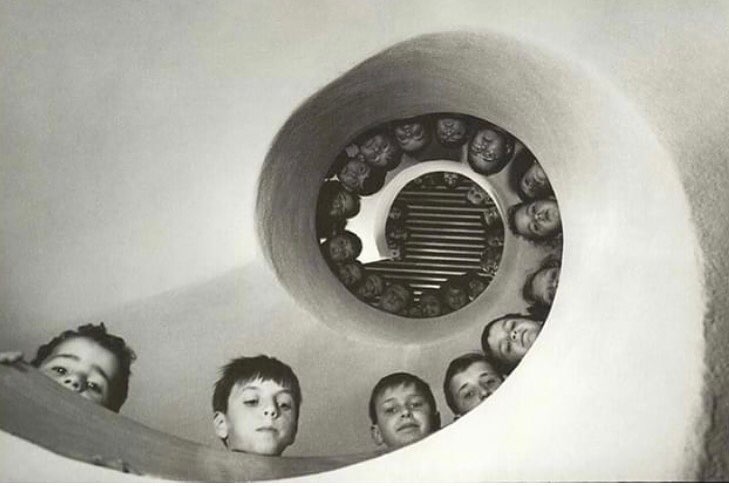
Henri Cartier-Bresson was born on 22 August 1908 in Chanteloup-en-Brie, France, and developed an early interest in painting before turning to photography in 1931 after seeing a photograph by Martin Munkacsi. He acquired his first Leica camera that year and began capturing candid images during travels in Europe and Africa. His career gained momentum with a 1933 exhibition at the Julien Levy Gallery in New York, and he co-founded Magnum Photos in 1947 with Robert Capa and others to support independent photojournalism. Key milestones include covering the Spanish Civil War in the 1930s, escaping a POW camp in 1943 during World War II, documenting Gandhi’s funeral in 1948, and publishing his book The Decisive Moment in 1952. By the 1970s, he shifted focus to drawing, establishing the Fondation Henri Cartier-Bresson in 2003 before his death on 3 August 2004. A 2024 retrospective at Fundació MAPFRE’s KBr centre in Barcelona highlighted his work. Visually, his images feature strong geometric compositions and subtle tonal ranges in black and white, capturing fleeting human interactions.
- Primary Genres: Street, Other (photojournalism).
- Primary Photography Styles: Straight Photography (candid captures in black and white using natural light for authentic moments); Humanist (emphasis on everyday people and emotions with symbolic depth).
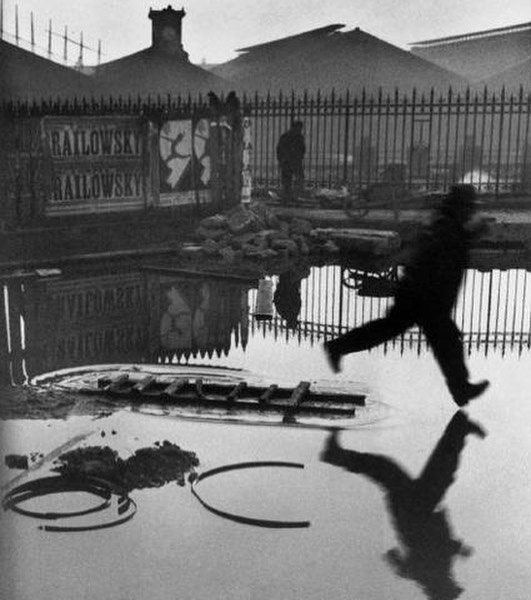
- Key Message: Cartier-Bresson sought to capture the “decisive moment,” a split-second where visual elements, action, and significance align to reveal deeper truths about human life. His photography aimed to document the world spontaneously, blending geometry with emotion without staging or manipulation.
Cartier-Bresson’s common subjects included ordinary people in urban settings, such as pedestrians, children, and workers in streets across Europe, Asia, and the Americas, as well as political events like coronations, funerals, and revolutions. His aesthetic focused on balanced compositions with leading lines, shapes, and contrasts in monochrome, highlighting textures like cobblestones, fabrics, or facial expressions to add depth. Techniques centred on a Leica rangefinder camera with a 50mm lens for discretion, handheld shooting at fast shutter speeds (e.g., 1/125s) to freeze motion, and reliance on available natural light—often soft overcast or slanted sunlight—without flash to maintain naturalism. He composed fully in the viewfinder, avoiding crops, and used black tape on his camera to reduce visibility. Darkroom work was minimal, involving gelatin silver prints with slight adjustments to contrast and exposure via dodging and burning, preserving the original frame’s integrity. Presentations included books like The Europeans (1955) and exhibitions at institutions such as MoMA, with prints typically up to 40×50 cm on archival paper for galleries and collections.
For intermediate photographers, Cartier-Bresson’s style relied on 35mm film photography, demanding precise exposure control similar to the zone system to map tones from deep shadows to highlights without digital previews or corrections. Film’s limitations encouraged anticipation and decisiveness, unlike digital cameras that allow instant review and heavy post-processing in tools like Lightroom. Learners can replicate his approach by using prime lenses for fixed perspectives, practising stealth in public spaces to capture unposed subjects, and limiting edits to basic tonal tweaks to build skills in in-camera composition. His method highlights the importance of observation and timing, treating photography as a form of drawing with light to tell stories through geometry and humanity.
- Accolades:
- Hasselblad Award (1982)
- Grand Prix National de la Photographie (1981)
- Overseas Press Club of America Award (1948, 1954, 1960, 1964)
- Prix Nadar (2006, posthumous)
- Trivia:
- Escaped a German POW camp on his third attempt in 1943 after 35 months in captivity.
- Began as a painter influenced by Surrealists and studied under André Lhote.
- Disliked being photographed and often shot without looking through the viewfinder.
Lessons from this Photographer:
Cartier-Bresson’s unique emphasis on the decisive moment teaches waiting for the perfect alignment of elements, training the eye to recognise fleeting opportunities rather than forcing scenes. Photographers can apply this by carrying a compact camera daily, focusing on geometric framing in everyday environments to build intuitive composition skills without relying on zooms or setups. His minimal post-processing encourages a mindset of authenticity, inspiring experimentation with natural light and candid interactions to deepen storytelling and appreciation for photography’s spontaneity.
Website and Portfolio:
-
- Website: https://www.henricartierbresson.org/en/
- Instagram: https://www.instagram.com/fondationhcb/
YouTube References:
- “Henri Cartier Bresson – Just Plain Love (Documentary)” – https://www.youtube.com/watch?v=ZYYwqo8HKbw
Citations:
- Wikipedia: https://en.wikipedia.org/wiki/Henri_Cartier-Bresson
- Britannica Biography: https://www.britannica.com/biography/Henri-Cartier-Bresson
- Magnum Photos Profile: https://www.magnumphotos.com/photographer/henri-cartier-bresson/
- Christie’s 10 Things: https://www.christies.com/en/stories/henri-cartier-bresson-7bf3dde002fa4846af6c8bb3afbc9ea4
- MoMA Exhibition: https://www.moma.org/calendar/exhibitions/967
- Bucerius Kunst Forum Retrospective (2024): https://www.buceriuskunstforum.de/en/exhibitions/watch-watch-watch-henri-cartier-bresson
- Fundació MAPFRE KBr Retrospective (2024-2025): https://www.metalocus.es/en/news/watch-watch-watch-approach-rich-and-diverse-photography-henri-cartier-bresson