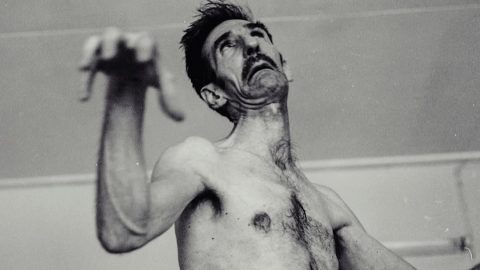

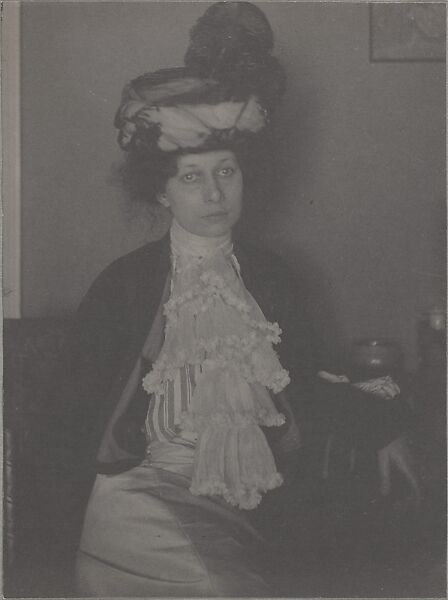
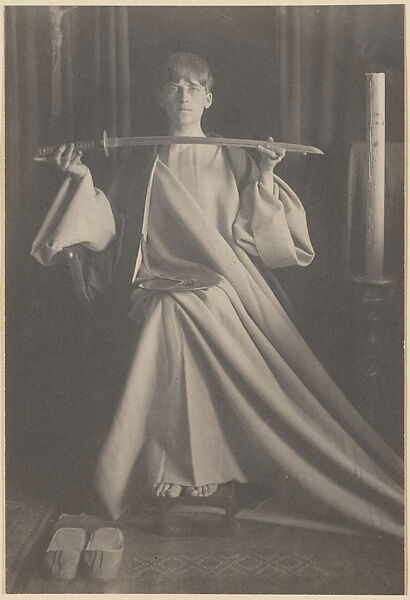
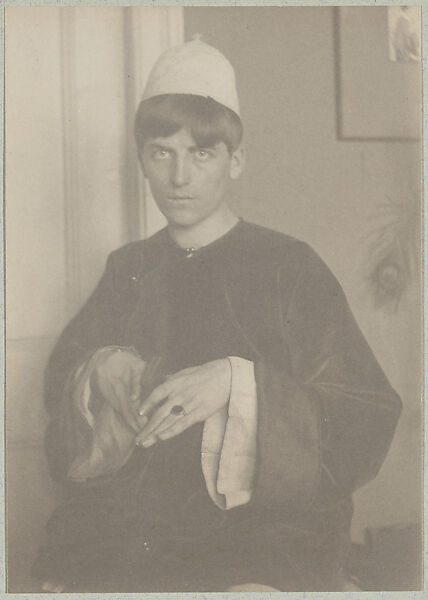
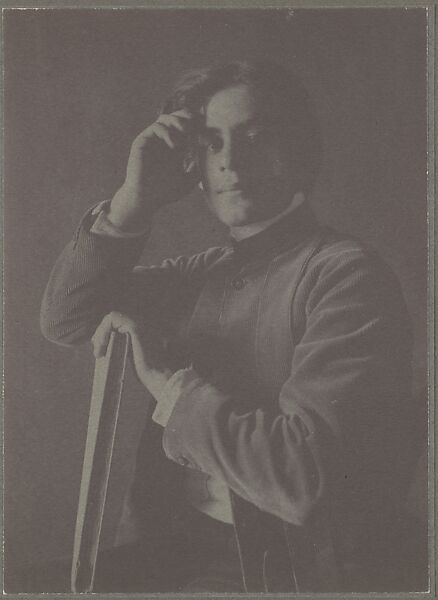
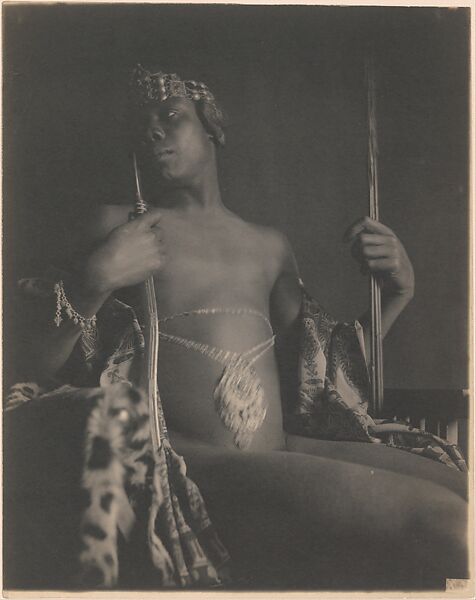
Fred Holland Day was born in Norwood, Massachusetts, in 1864 to a wealthy merchant family, allowing him independent means to pursue interests. He began photographing in 1886 as a self-taught enthusiast, influenced by Aestheticism and literary figures like Oscar Wilde. Over his career, Day became a leading Pictorialist, co-founding the Photo-Secession group in 1902, though rivalries with Alfred Stieglitz led to his eclipse. His most controversial work, The Seven Last Words from 1898, featured self-portraits as Christ after he fasted and grew his beard for authenticity. He published fine books through Copeland and Day from 1893 to 1899 and mentored photographers like Gertrude Käsebier. Day’s images are known for soft-focus effects and symbolic, atmospheric compositions that blend reality with allegory.
- Primary Genres: Portrait, Fine Art.
- Primary Photography Styles: Pictorialism (soft-focus, atmospheric, mimicking painting through diffusion and tonality); Symbolism (spiritual, staged, using props and poses for mythological or religious themes).
- Key Message: Day sought to elevate photography to fine art, using elaborate staging and symbolic depth to explore spirituality, identity, and mythology with emotional resonance. His work challenged conventions by treating sacred subjects and the male form as artistic expressions.
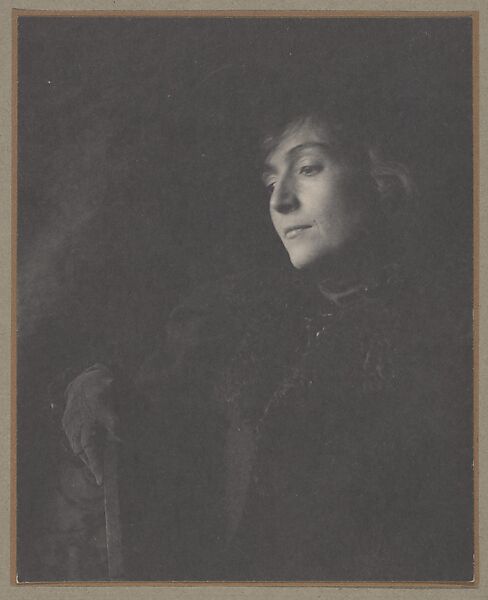
Fred Holland Day’s most common subjects were staged portraits of mythological figures, saints, and self-portraits as Christ or other icons, often featuring young men or diverse models from Boston’s immigrant neighbourhoods. He emphasised aesthetics like muted sepia tones from platinum prints, textures of draped fabrics or props like crowns of thorns, and a dreamlike quality through blurred edges. Techniques included large-format cameras for detail, diffusing lenses—sometimes with petroleum jelly—for soft focus, and natural light from windows or candles to create warm gradients without harsh shadows. In the darkroom, he used platinum or gum bichromate processes for rich, hand-adjusted tones, avoiding sharp realism to evoke mood. Presentation involved small prints (around 10×12 inches) mounted in layered “American Style” frames, exhibitions at venues like the Boston Camera Club, and limited editions that positioned his work as collectible art.
For intermediate learners, Day’s Pictorialism relied on analogue processes like platinum printing, which offered subtle tonal control similar to the zone system but required manual manipulation, contrasting with digital tools that achieve soft focus via filters in software like Photoshop. His symbolic staging teaches composition through props and poses to convey narrative, encouraging use of diffusion filters or vaseline on lenses for atmospheric effects—beginners can try this with basic film setups, while intermediates experiment with mounting techniques to enhance presentation. Unlike straight photography, Day blended capture with artistic intervention, showing how pre-visualisation and darkroom work can transform literal shots into evocative art. Day’s influence waned after a 1904 studio fire destroyed much of his archive, but his revival in the 1990s through museum shows underscores persistence in advocating photography’s artistic status, offering lessons in using personal passion for thematic depth.
- Accolades:
- Co-founder of the Photo-Secession (1902)
- Works in collections at the Metropolitan Museum of Art and Library of Congress
- Retrospective at the Museum of Fine Arts, Boston (2000-2001)
- Included in Alfred Stieglitz’s pioneering exhibitions
- Trivia:
- Fasted and grew his beard to authentically portray Christ in self-portraits.
- Assembled one of the world’s largest collections of John Keats materials and dedicated the poet’s first memorial in England.
- Lost about 2,000 prints and negatives in a 1904 studio fire.
Lessons from this Photographer:
Day’s unique Pictorialist approach teaches the value of staging and symbolism, encouraging photographers to plan compositions with props and poses that add narrative layers beyond literal capture. His soft-focus techniques inspire experimentation with diffusion methods, applying mindset shifts like viewing the camera as a painter’s tool to evoke emotion through tonality. By prioritising artistic intent over technical sharpness, he promotes deeper craft appreciation, urging intermediates to use darkroom or digital equivalents for mood enhancement and thematic exploration in their work.Day’s unique Pictorialist approach teaches the value of staging and symbolism, encouraging photographers to plan compositions with props and poses that add narrative layers beyond literal capture. His soft-focus techniques inspire experimentation with diffusion methods, applying mindset shifts like viewing the camera as a painter’s tool to evoke emotion through tonality. By prioritising artistic intent over technical sharpness, he promotes deeper craft appreciation, urging intermediates to use darkroom or digital equivalents for mood enhancement and thematic exploration in their work.
Website:
YouTube References:
- “Pictorialism and F. Holland Day Analysis by Art History Channel – https://www.youtube.com/watch?v=example_analysis”
Citations:
- Metropolitan Museum of Art Collection: https://www.metmuseum.org/art/collection/search/269295
- Wikipedia Entry: https://en.wikipedia.org/wiki/F._Holland_Day
- Getty Museum Profile: https://www.getty.edu/art/collection/person/103KGE
- Bruce Silverstein Gallery: https://brucesilverstein.com/artists/68-f.-holland-day/
- Library of Congress: https://www.loc.gov/item/2021688338/