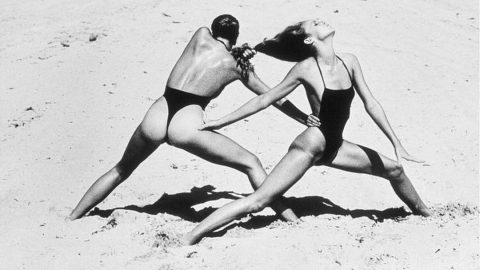

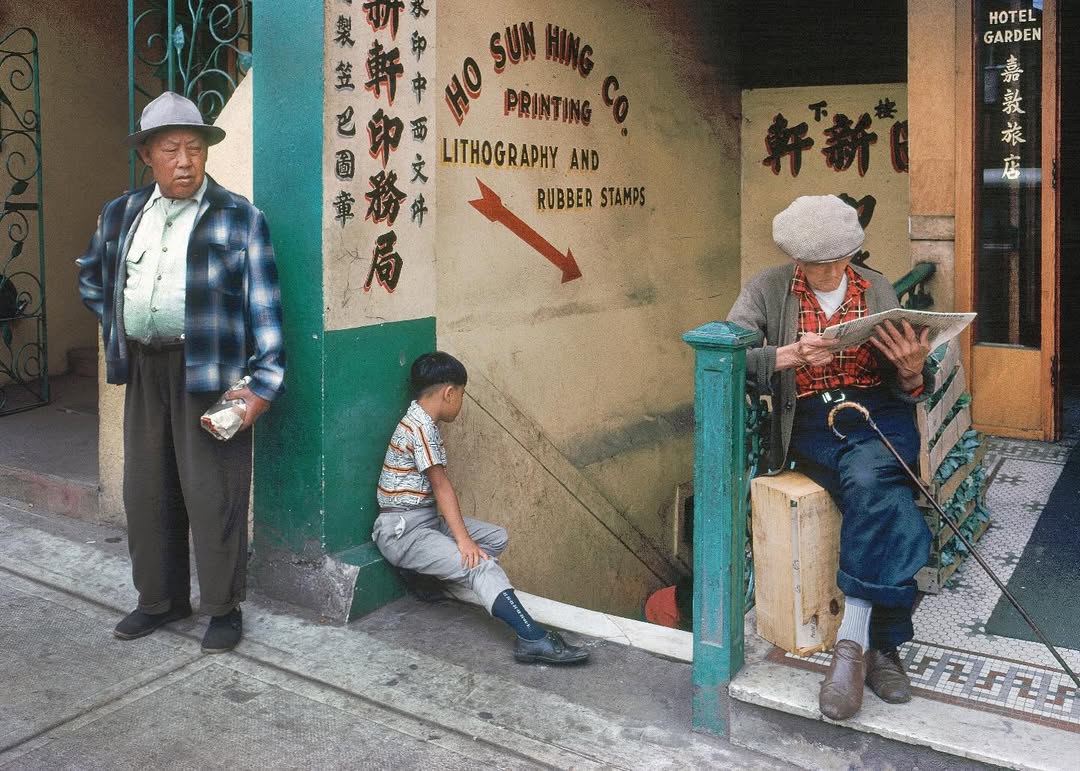
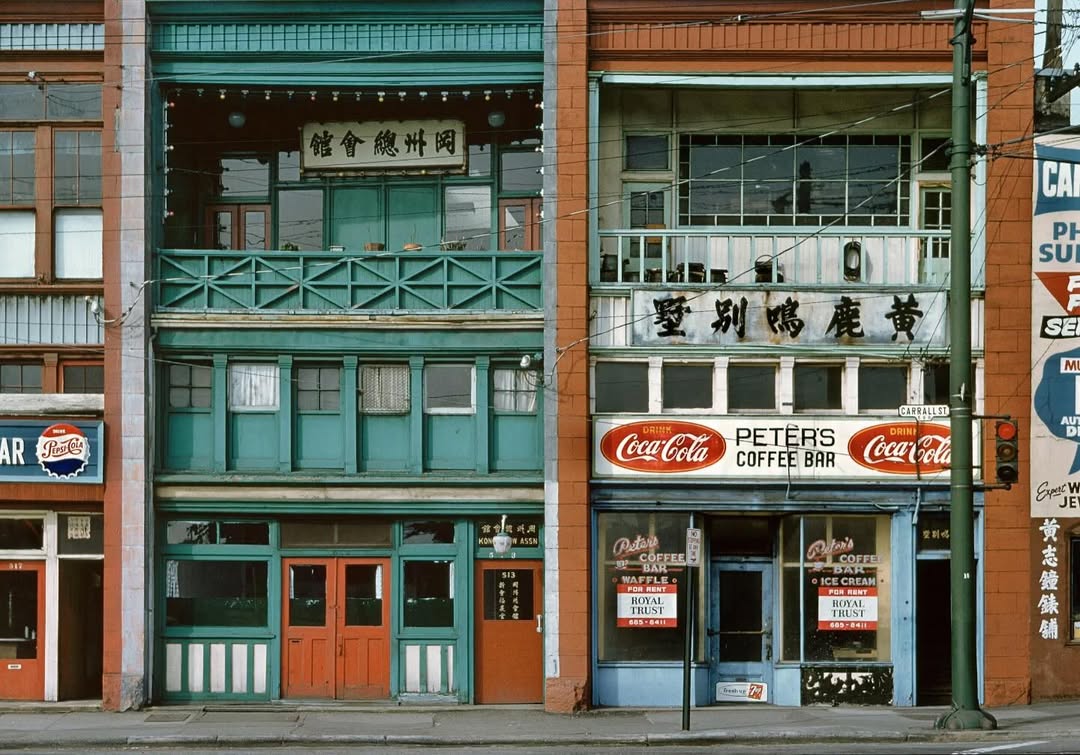
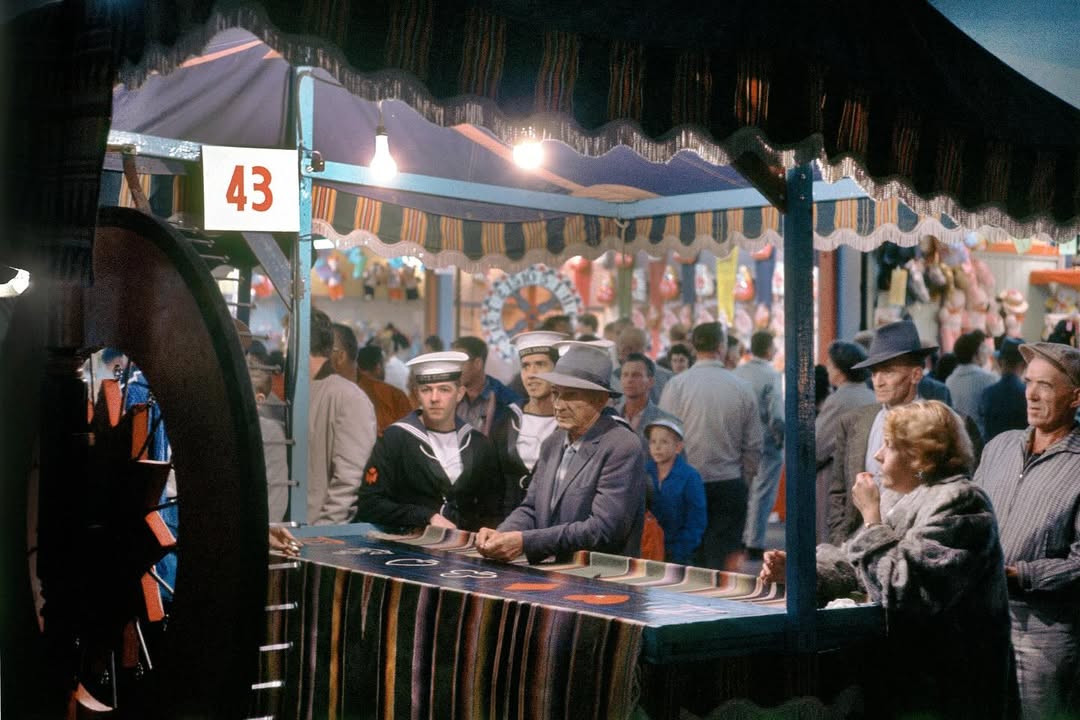
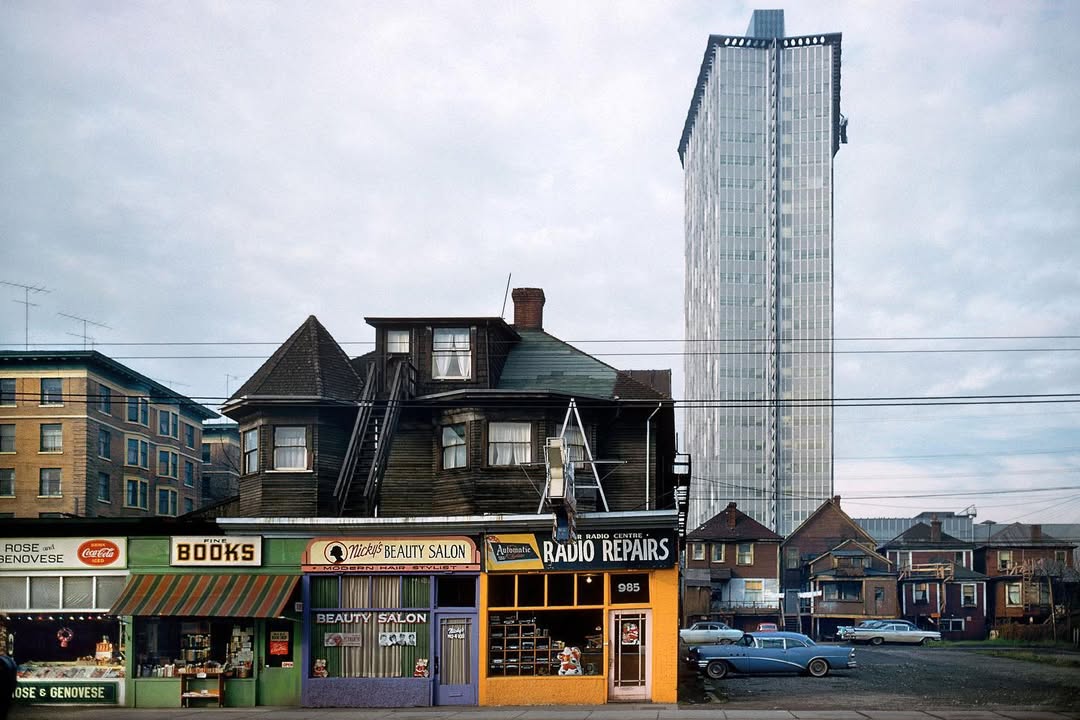
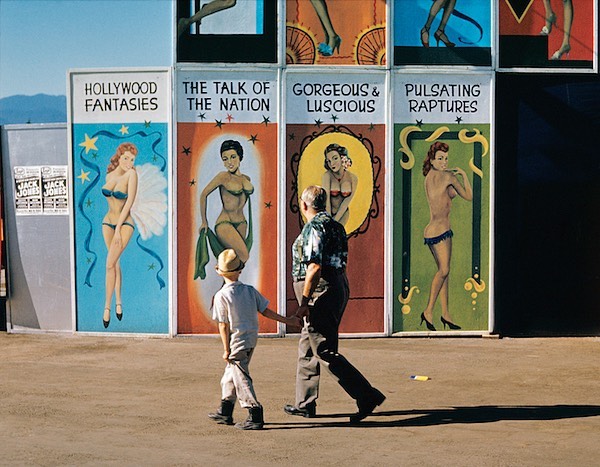
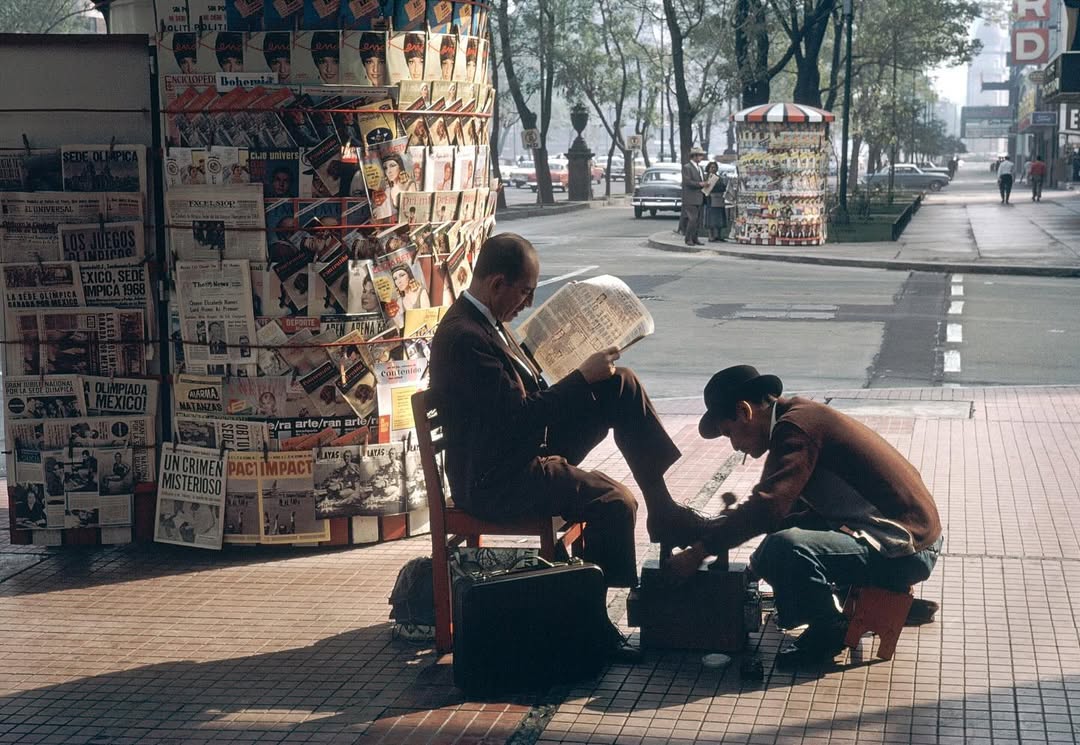
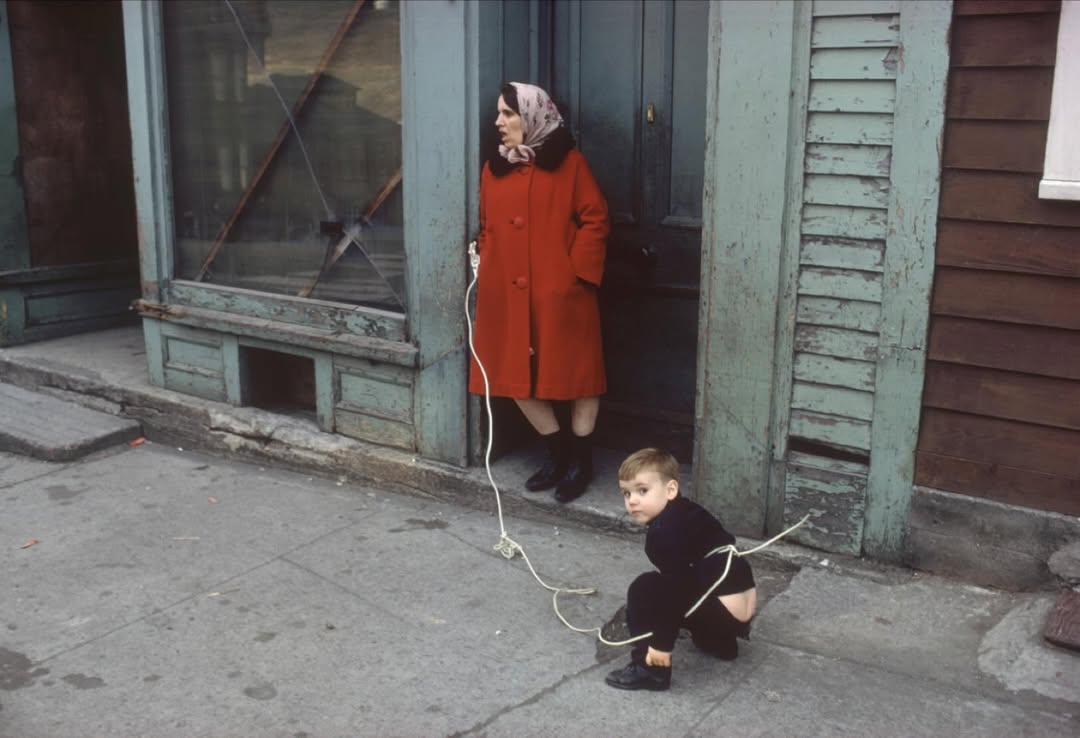
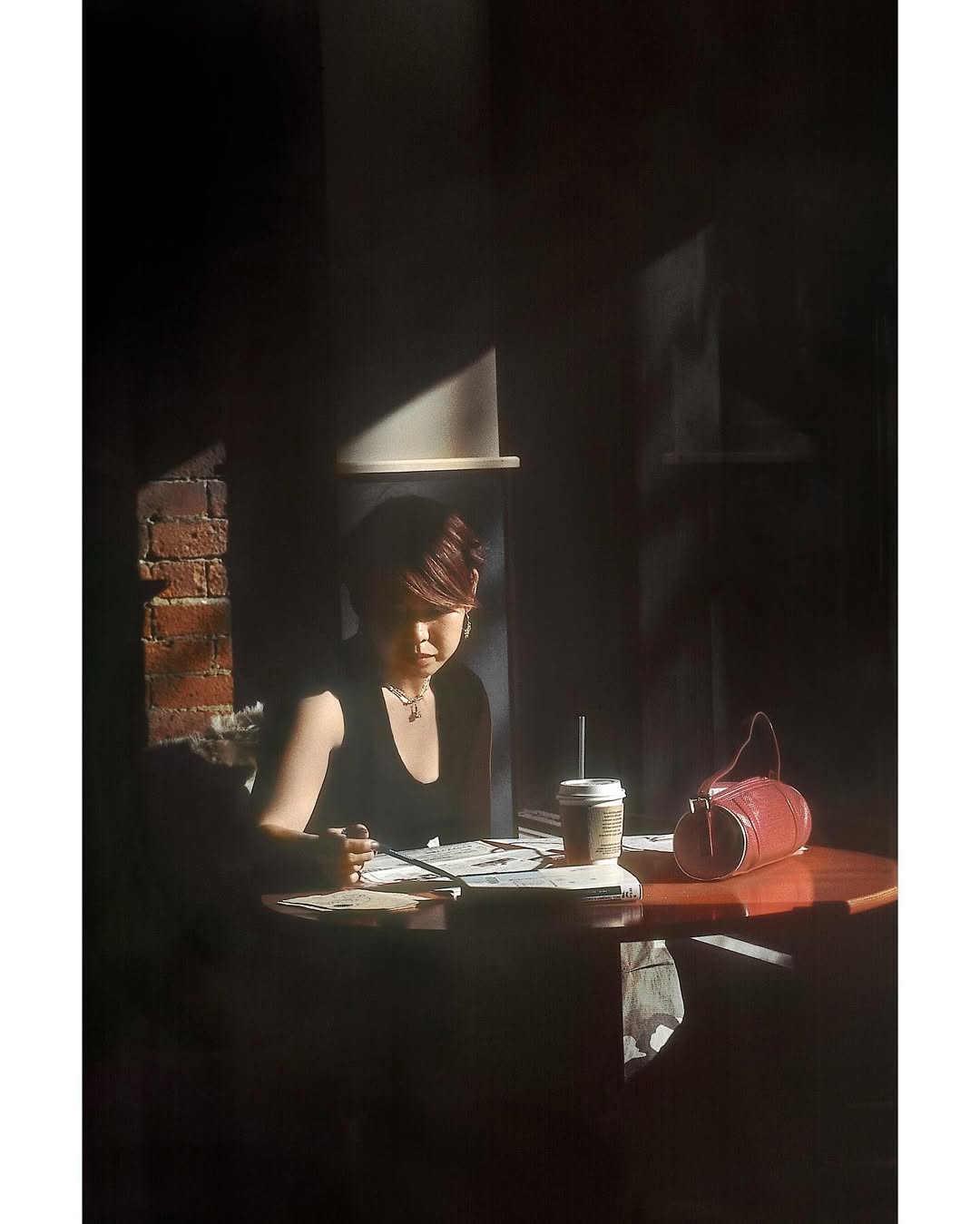
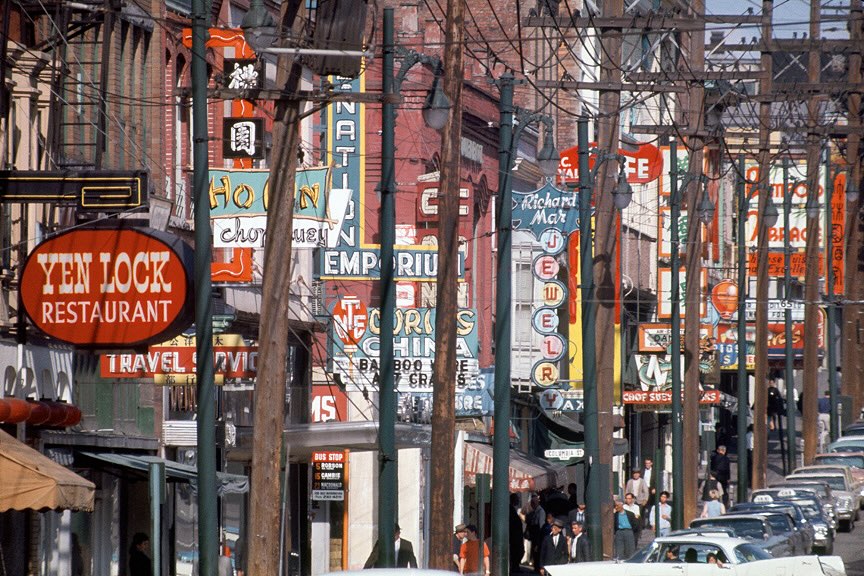
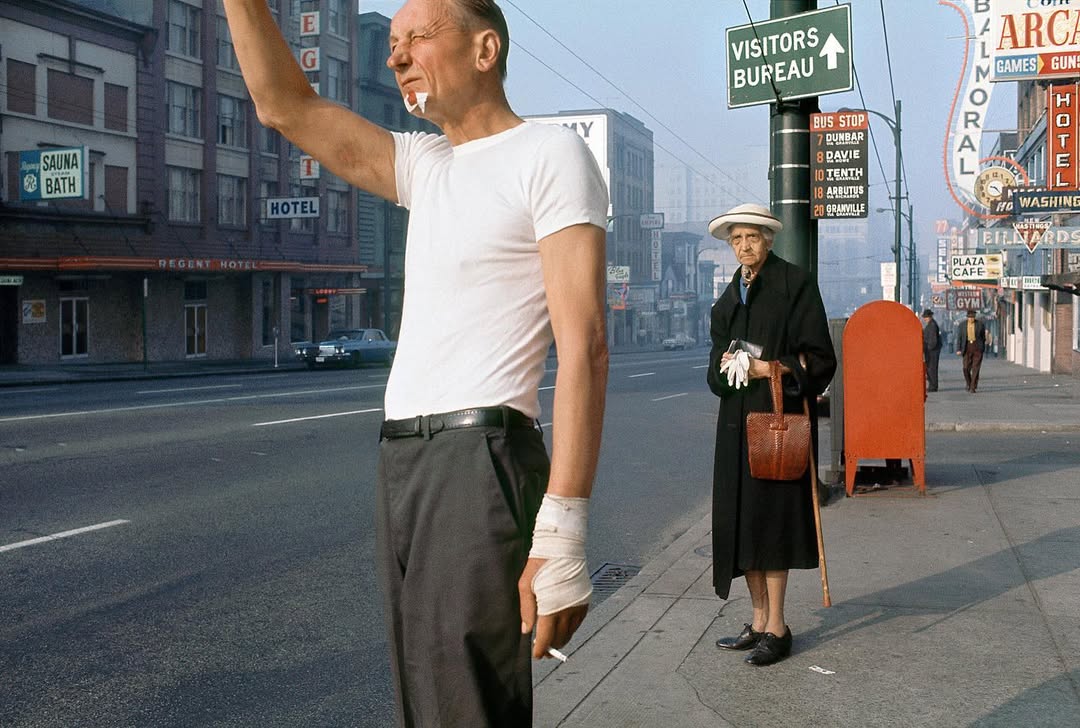
Fred Herzog was born in Stuttgart, Germany, in 1930 and, as a war orphan, emigrated to Canada in 1952, settling in Vancouver the following year. He began photography as a hobby in the early 1950s, purchasing his first camera in Germany around age 20, and pursued it alongside a day job in medical photography starting in 1957. Over a 60-year career, Herzog captured over 100,000 images, mostly on Kodachrome slide film, but gained widespread recognition later in life with a major retrospective at the Vancouver Art Gallery in 2007. Key milestones include publishing books like Fred Herzog: Modern Color in 2017 and exhibitions that highlighted his pioneering use of colour in street photography. He passed away in 2019. His work features vibrant, saturated colours and candid snapshots that preserve mid-20th-century urban life.
- Primary Genres: Street, Documentary.
- Primary Photography Styles: Straight Photography (colourful, candid, emphasising realistic urban scenes with early colour film); Symbolism (urban, nostalgic, using elements like neon and rain to evoke cultural atmosphere).
- Key Message: Herzog documented urban life’s everyday pulse, capturing candid moments that reflect mid-century culture and atmosphere with vivid authenticity. His photographs serve as a time capsule of Vancouver’s streets, blending humanism with a quiet observation of societal change.
Fred Herzog’s most common subjects were the streets of 1950s-1970s Vancouver, including pedestrians, shop fronts, neon signs, cars, and children in everyday settings like rainy sidewalks or bustling markets. He focused on aesthetics such as colour saturation—warm reds from signs, cool blues from skies, and faded greens from vehicles—along with textures like wet pavement or fabric details, creating a nostalgic yet lively feel. Techniques involved handheld shooting with Leica M3 or Nikon F cameras and 35mm lenses for wide views, relying on natural light from overcast days or dusk for even illumination and neon punch, while using low-ISO Kodachrome film (ASA 10-64) that required steady hands and no flash. Editing was minimal, with straight scans from slides or basic darkroom prints up to 20×24 inches to retain grain and authentic hues. Presentation included books like Fred Herzog: Photographs (2011) as compilations, gallery exhibitions at places like Equinox Gallery, and large prints that emphasised his role as a colour pioneer.
For intermediate learners, Herzog’s style demonstrates the constraints and strengths of analogue colour film compared to digital, where Kodachrome’s slow speed demanded precise exposure control similar to the zone system for balancing highlights and shadows, unlike digital’s instant adjustments. His straight approach teaches candid composition through leading lines and framing everyday chaos, using film’s inherent grain for texture—beginners can mimic this with entry-level film cameras, while intermediates experiment with scanning slides to apply subtle digital tweaks without over-editing. The symbolic elements encourage viewing urban scenes as narratives, blending documentary fact with emotional depth. Herzog’s legacy includes self-taught methods and a dual career in medical imaging, which honed his technical precision; his late recognition underscores persistence, offering insights into using available light and minimal gear for impactful street work in any era.
- Accolades:
- Audain Prize for Lifetime Achievement in the Visual Arts (2014)
- Honorary Doctorate from Emily Carr University of Art and Design (2008)
- Works in collections at National Gallery of Canada and Vancouver Art Gallery
- Trivia:
- Captured over 100,000 Kodachrome slides throughout his career.
- Arrived in Canada as a post-war orphan with limited possessions.
- Worked in medical photography labs for over 40 years, including at the University of British Columbia.
Lessons from this Photographer:
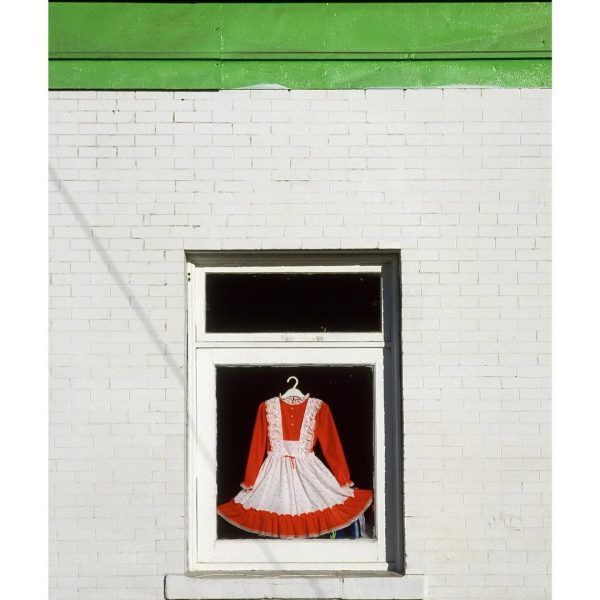
Herzog’s unique early adoption of colour in street photography teaches the value of persistence and observation, encouraging learners to roam familiar urban areas patiently for candid moments that tell stories without staging. His reliance on natural light and minimal equipment inspires mindset shifts towards simplicity, applying techniques like wide-angle framing to capture context in low-ISO conditions that build technical discipline. By avoiding heavy post-processing, he promotes appreciating film’s authenticity, urging intermediates to experiment with analogue formats for deeper craft insight and emotional resonance in their work.
Website and Portfolio:
YouTube References:
- “Street Photography Lessons from Fred Herzog” by Grainy Days – https://www.youtube.com/watch?v=GPvEv1QhwAc
Citations:
- Photographer’s Estate at Equinox Gallery: https://www.equinoxgallery.com/our-artists/fred-herzog
- Wikipedia Entry: https://en.wikipedia.org/wiki/Fred_Herzog
- All About Photo Profile: https://www.all-about-photo.com/photographers/photographer/1533/fred-herzog
- The Tyee Article: https://thetyee.ca/Culture/2019/09/13/Fred-Herzog-Vancouver-Beloved-Photographer-Life-Death/
- National Gallery of Canada Article: https://www.gallery.ca/magazine/your-collection/fred-herzog-street-photography