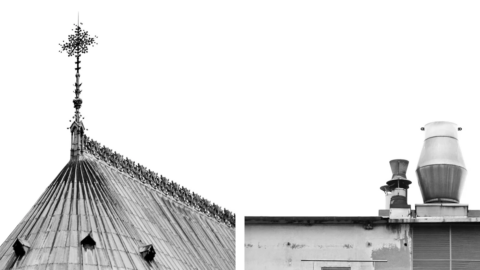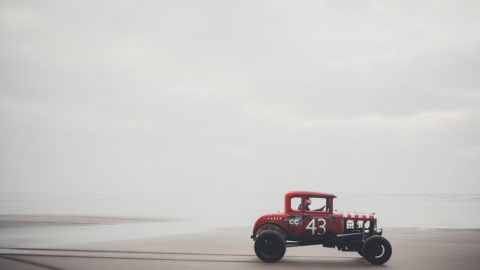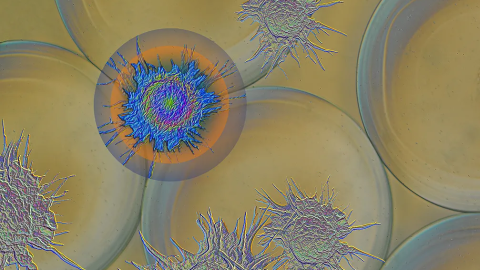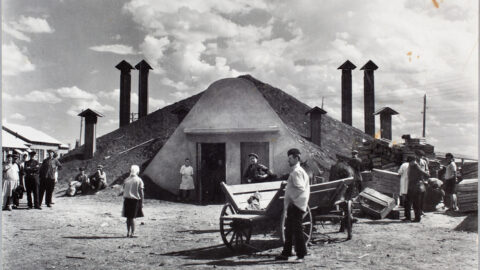
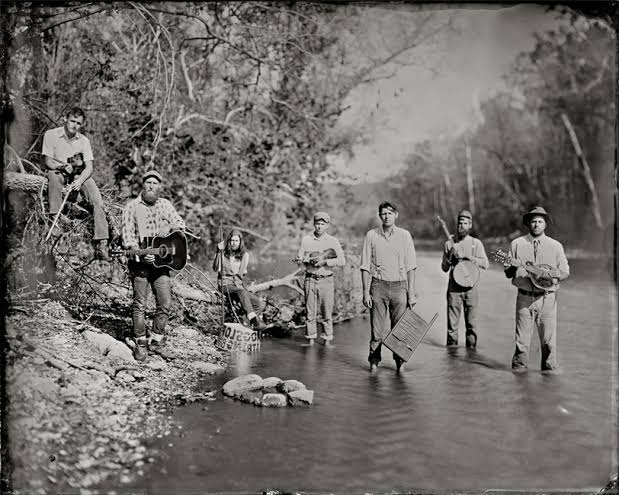


Lisa Elmaleh, born in 1984 in Miami, Florida, discovered her passion for photography early, influenced by her father’s darkroom work. She earned a BFA from the School of Visual Arts in New York in 2007 and quickly embraced wet plate collodion. Now based in West Virginia, she has spent over 15 years travelling the US in a converted truck with a portable darkroom, creating timeless images that connect historical processes with contemporary American life. Her tintypes have a distinctive raw, earthy quality with visible imperfections that give them real presence.
- Primary Genres: Fine Art, Documentary, Portrait
- Primary Photography Style: Experimental analog (wet plate collodion/tintype) combined with straight photography – direct, unmanipulated capture that produces evocative, historical-feeling images
- Key Message: Elmaleh uses 19th-century techniques to document modern America, creating a tangible link between past and present. Her work highlights the enduring character of landscapes and communities, especially in places like the Everglades and Appalachia, showing how traditional methods can reveal deeper truths about culture and environment today.
Her main subjects are the American landscape and its people – the Everglades ecosystem, Appalachian folk musicians, rural communities, and broader documentation along roads from the mountains to the US-Mexico border. You’ll see swamp grasses, weathered faces, quiet interiors, and vast open spaces, all captured with rich textures and a muted, sepia-toned palette. She shoots almost exclusively with natural light, often during golden hour or overcast conditions, using an 8×10 large-format camera. The plates are coated, exposed, and developed on-site within minutes, which forces a deliberate, thoughtful approach.
What makes her aesthetic unique is the acceptance of the process’s imperfections – streaks, uneven edges, and chemical marks stay in the final tintypes, adding authenticity rather than being cleaned up. She prints in a traditional black-and-white darkroom back home and has published work in a monograph (Everglades, 2016). No digital adjustments on the core images; it’s all analog. For intermediate photographers, this is a great example of how committing to one demanding process (wet plate vs the convenience of digital) changes the way you see and interact with a scene. The time pressure and hands-on chemistry encourage slower, more intentional work that digital workflows can sometimes lack.
- Accolades:
- Guggenheim Fellowship (2024)
- Arnold Newman Prize (2022)
- Aaron Siskind Foundation IPF Grant (2011)
- Light Work Residency and PDN 30 New & Emerging Photographers
- Trivia:
- Converted her Toyota Tacoma truck into a mobile darkroom and living space herself
- Spent about a decade documenting the Everglades
- Teaches wet plate collodion at the Penumbra Foundation and School of Visual Arts

Lessons from this Photographer:
Lisa shows that limitations can be a strength – the wet plate process demands you get it right in camera and on location, which builds discipline and presence. Try restricting yourself to one technique or location for a long project; it forces deeper exploration. Her work also reminds us that subject interaction matters: visiting people at home and setting up the darkroom nearby creates trust and more authentic portraits. Whether you shoot film, digital, or experiment with alternative processes, focus on what the medium adds to the story rather than fighting its constraints. It’s inspiring to see how sticking with a slow craft in a fast world can produce powerful, lasting images.
Website and Portfolio:
-
- Website: https://www.lisaelmaleh.com
- Instagram: https://www.instagram.com/elmalayheehoo/?hl=en
Citations:
- Wikipedia: Lisa Elmaleh – https://en.wikipedia.org/wiki/Lisa_Elmaleh