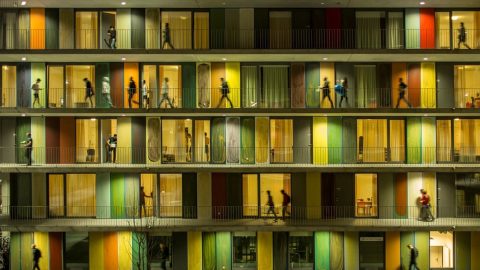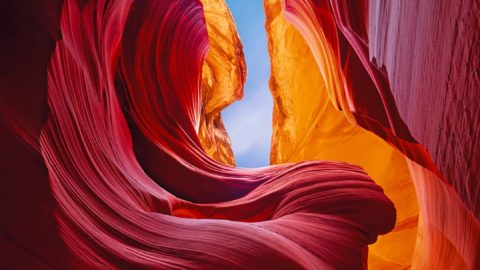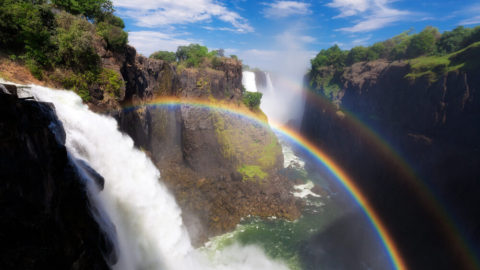
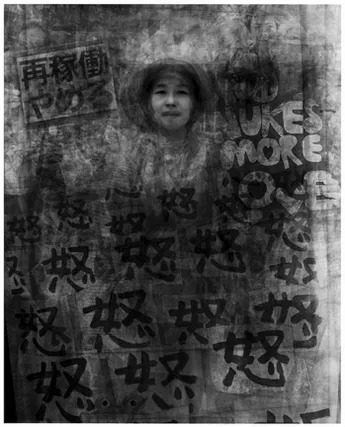
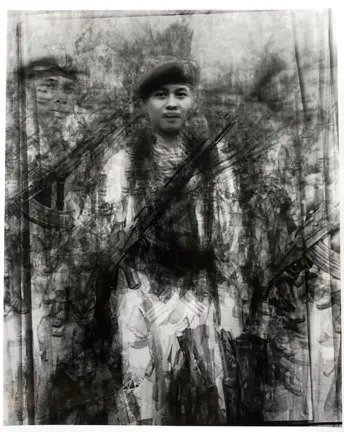
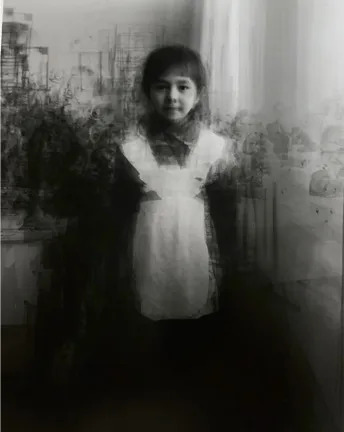
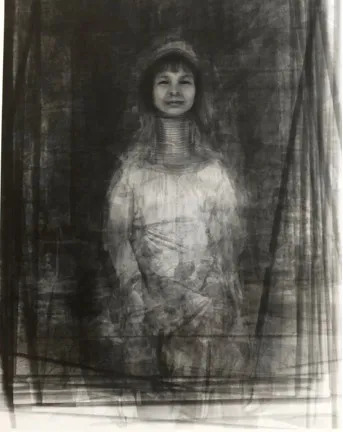
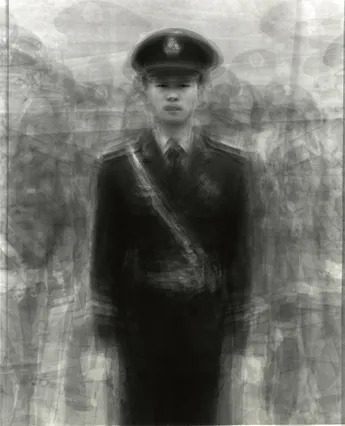
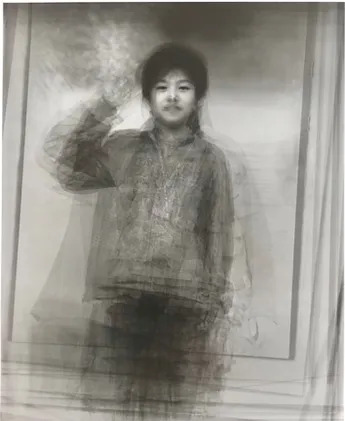
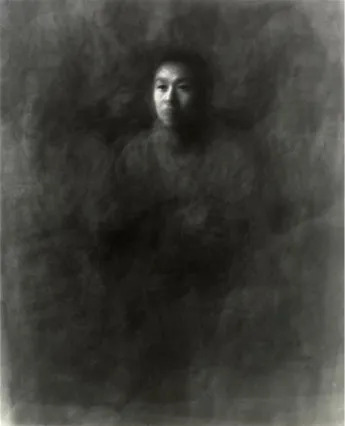
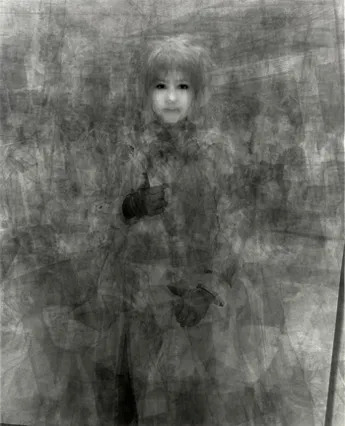
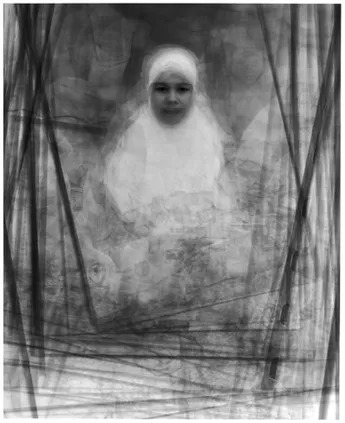
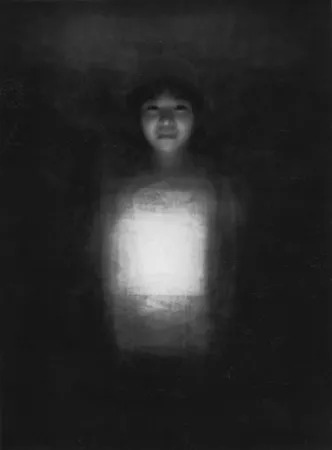
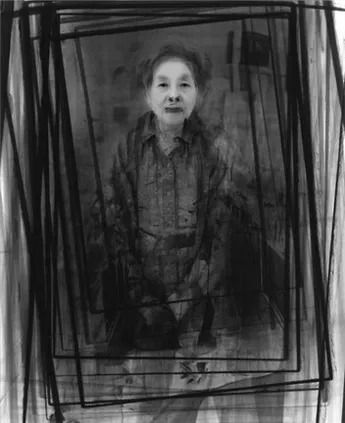
Ken Kitano was born in 1968 in Tokyo, Japan, where he continues to live and work. He graduated from Nihon University’s College of Industrial Technology in 1991 and began his photography career in the late 1980s, initially with commercial work before going fully freelance around 2003. His breakthrough came with the Our Face series, started in 1999, which brought international attention through exhibitions and books. Over 25 years, he has explored time, existence, and human connection using experimental techniques in black and white. His images often show soft, blended, ghostly forms that merge many individuals into one.
- Primary Genres: Conceptual, Portrait
- Primary Photography Style: Experimental composite with symbolic overlay — multiple exposures layered in the darkroom to create soft, ethereal blended portraits rather than sharp individual details.
- Key Message: Ken Kitano examines humanity’s collective identity and shared essence. By merging dozens of portraits from the same group, he shows how individuality fades to reveal something universal, influenced by ideas of unity, globalisation, and Zen concepts of interconnectedness and the void. His work suggests we are all part of a larger whole beyond personal differences.
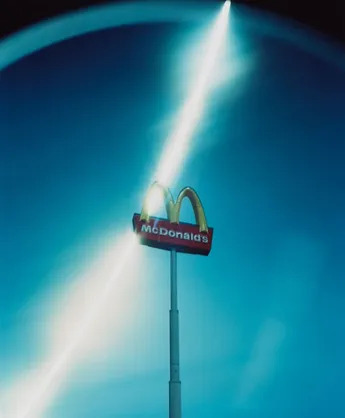
Ken Kitano’s most recognised work focuses on people from specific social, professional, or cultural groups — nurses, monks, athletes, protesters, or communities across Asia. He photographs them individually with a large-format 4×5 camera on black-and-white film, then layers the negatives (often 30–100 exposures) one by one in the darkroom onto a single sheet of paper using very low exposures each time. This analogue technique creates soft, hazy composites where facial features blend into a single unified “face.” He uses even studio lighting to keep consistency across sessions, sometimes spanning days. Later series like One Day and Gathering Light use extremely long exposures (hours to months) to capture the passage of time in landscapes.
For intermediate photographers, Kitano offers a strong example of moving beyond the single decisive moment. His process relies heavily on film and traditional darkroom methods rather than digital compositing, though minor scanning adjustments may occur later. The key concept is multiple exposure and controlled layering to build atmosphere and meaning. This teaches patience and precision — calculating exposure times so no single image dominates, resulting in a ghostly yet cohesive result. His books, such as Our Face: Asia, demonstrate how a long-term conceptual project can evolve over years and travel.
- Accolades:
- Society of Photography Award (2004)
- Newcomer’s Award, Photographic Society of Japan (2007)
- New Photographer Award, 27th Higashikawa Award (2011)
- Special Prize, 14th Taro Okamoto Award for Contemporary Art (2011)
- Trivia:
- He has photographed well over 1,000 individuals across many countries for the Our Face project.
- The series was partly inspired by major events like the 1995 Hanshin Earthquake and Tokyo sarin attack.
- He spent time as an artist-in-residence in Beijing and later studied in Los Angeles through a Japanese government programme.
Lessons from this Photographer:
Kitano shows the power of stepping back from the individual to see the bigger picture — literally layering portraits to explore shared identity. Try starting small with multiple exposures on film or controlled digital blending to understand how repetition and overlap create new meaning. Focus on consistency in lighting and subject distance when building a series. The biggest takeaway is patience: conceptual ideas often need time, repetition, and technical experimentation to fully form. Stay curious about what lies beyond normal vision, whether through long exposures or composite techniques, and let your process reflect deeper questions about connection and time.
Website:
-
- Website: https://mem-inc.jp/artists_e/kitano_e/ (represented by MEM Gallery)
- Other Portfolio: https://ibashogallery.com/artists/49-ken-kitano/
- Rose Gallery: https://rosegallery.net/artists/44-ken-kitano/
Citations:
- Ken Kitano on Wikipedia: https://en.wikipedia.org/wiki/Ken_Kitano
- MEM Gallery Artist Page: https://mem-inc.jp/artists_e/kitano_e/
- IBASHO Gallery: https://ibashogallery.com/artists/49-ken-kitano/
- Blindspot Gallery: https://blindspotgallery.com/artist/ken-kitano/
- Rose Gallery: https://rosegallery.net/artists/44-ken-kitano/
- Priska Pasquer Gallery Bio: https://priskapasquer.art/ken-kitano-our-face-november-16-2010-february-5-2011/
- Photographic Society of Japan Awards: https://www.psj.or.jp/english/sub2.html