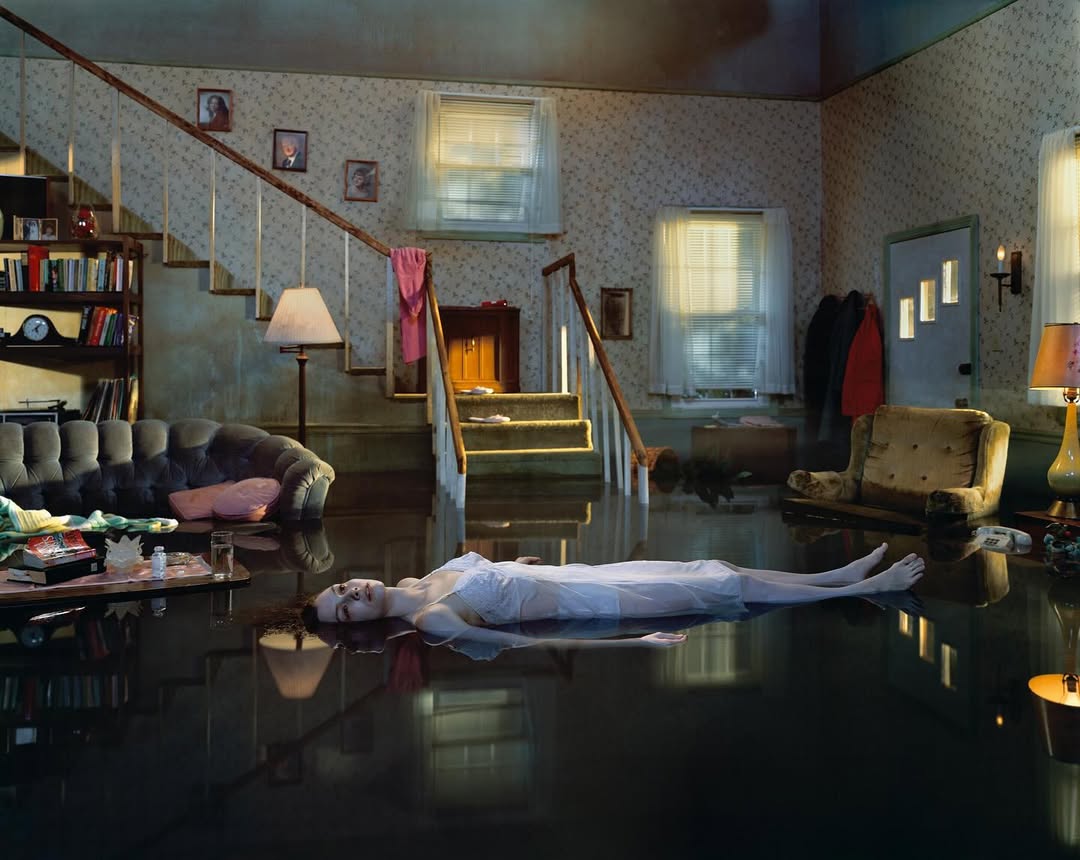
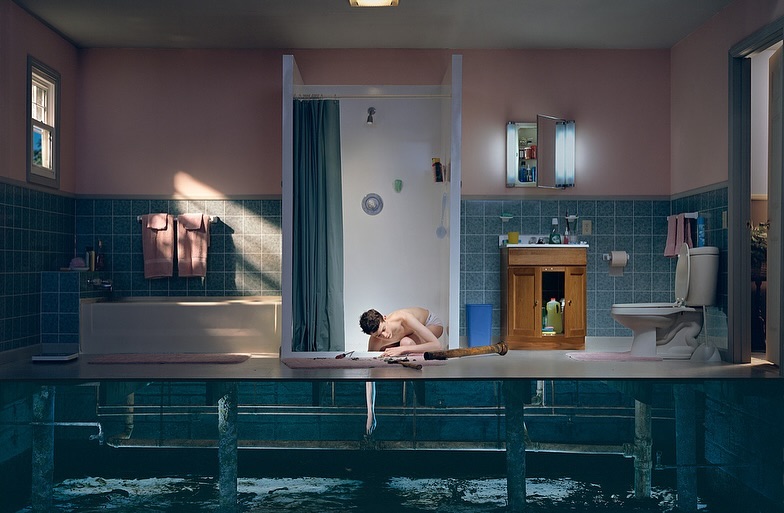
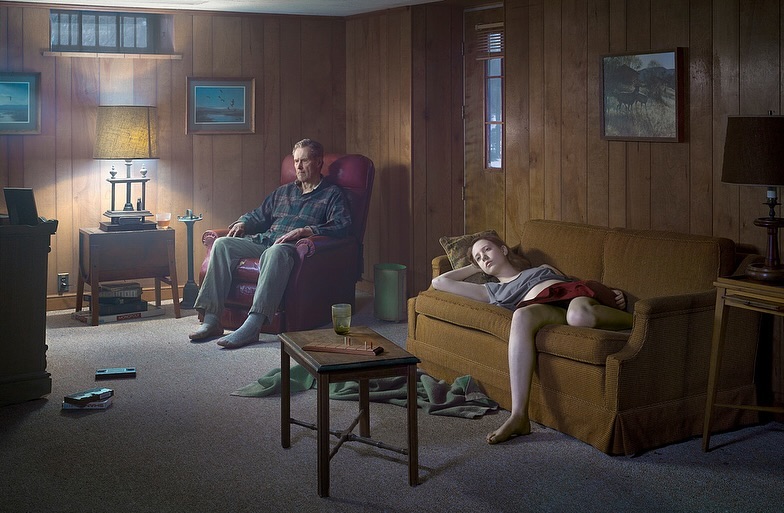
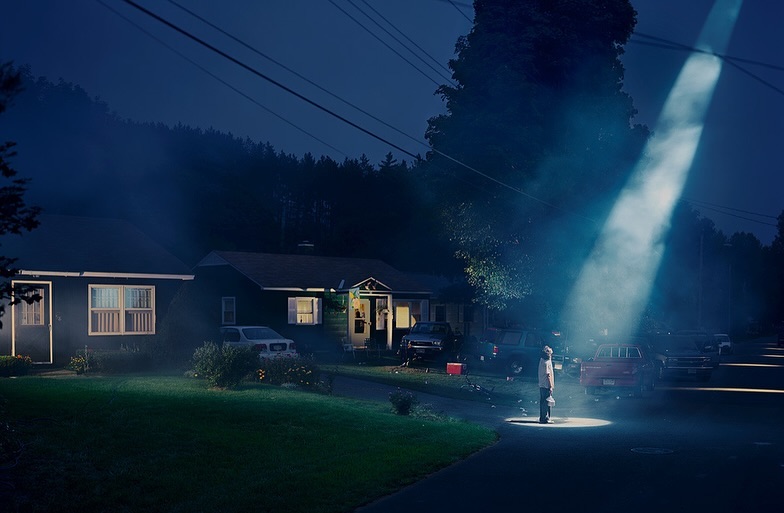
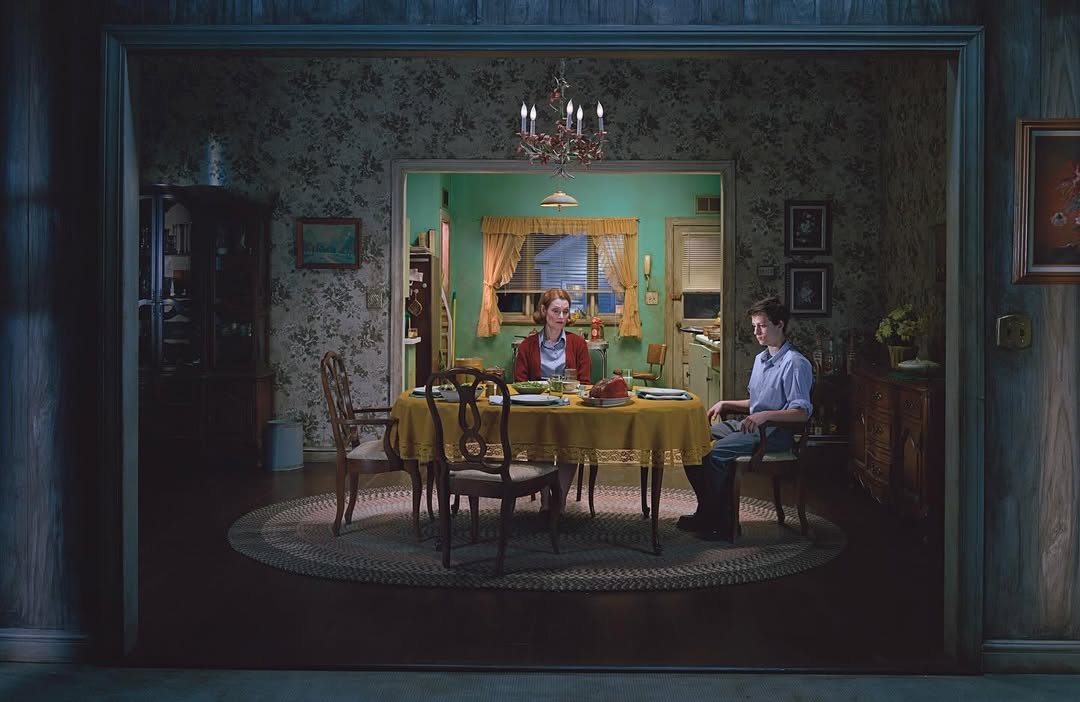
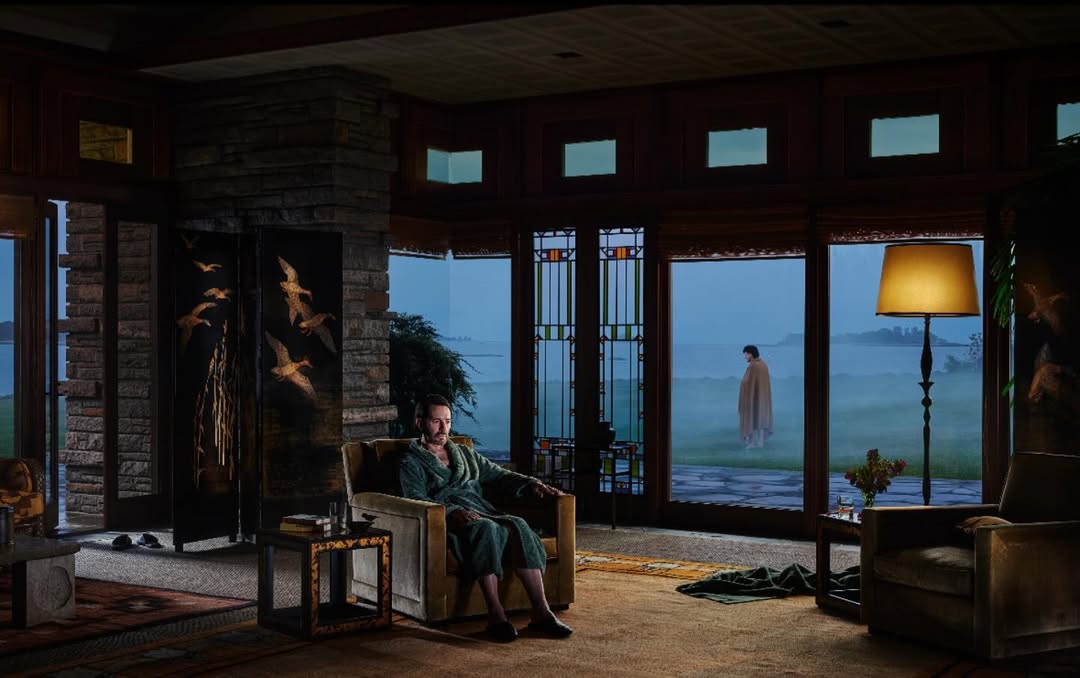
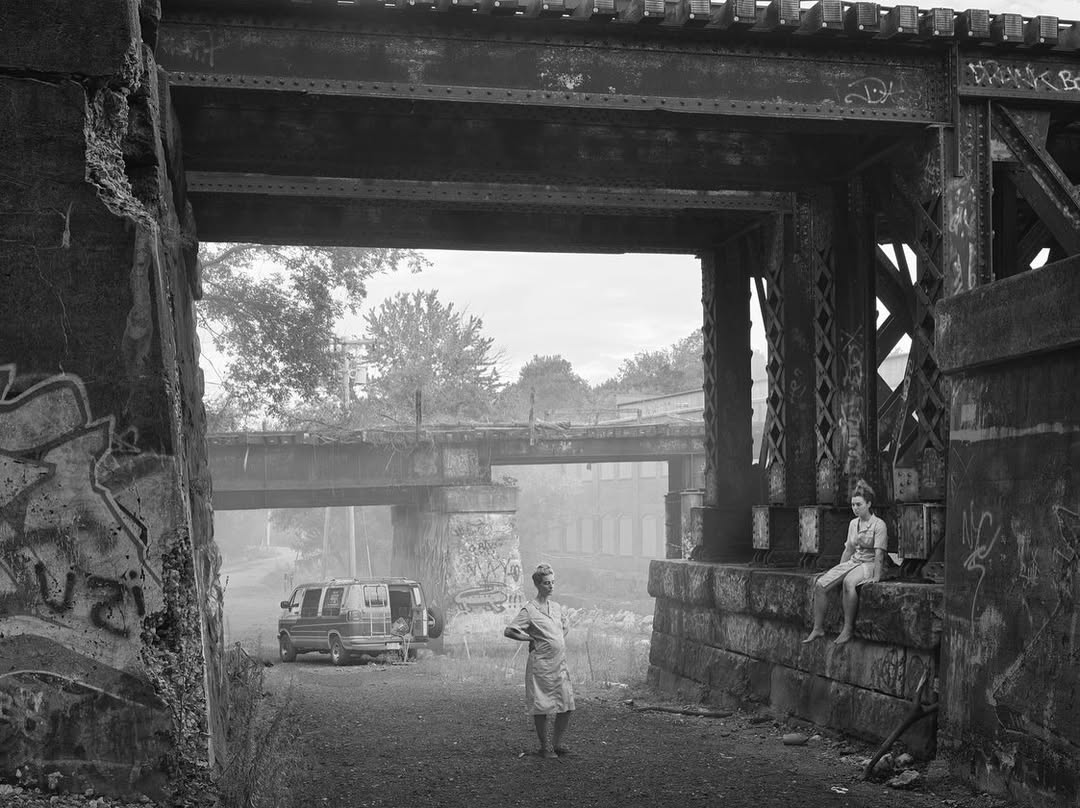
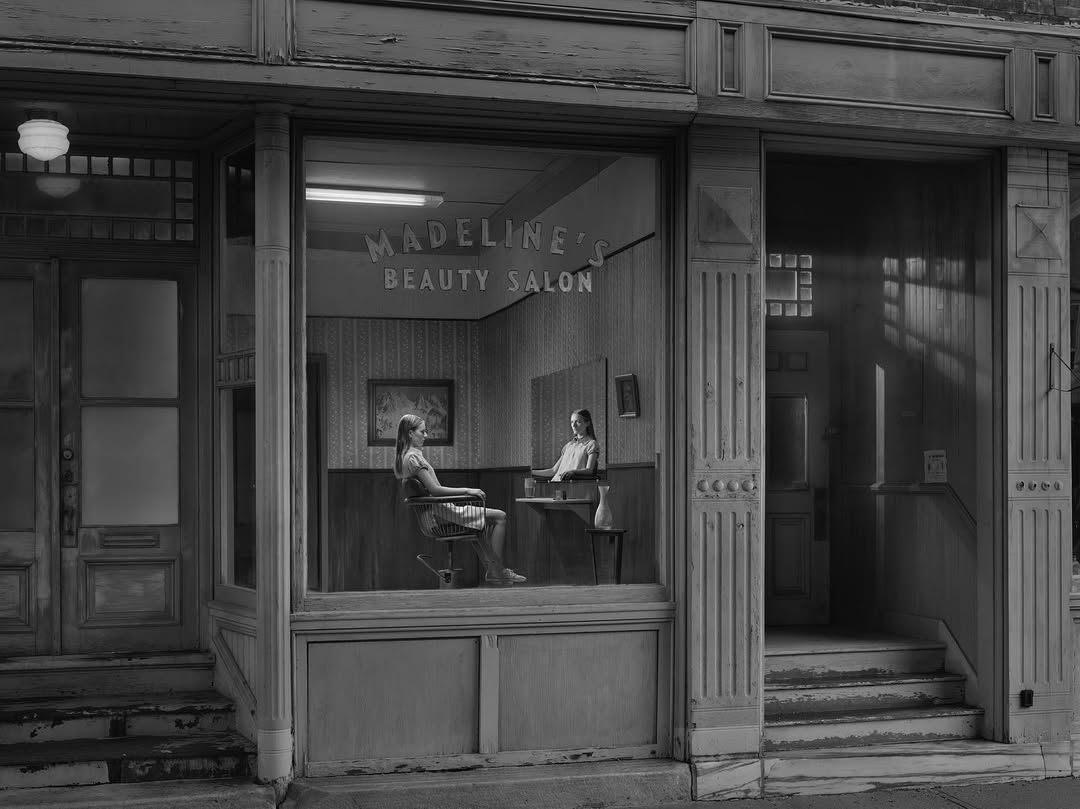
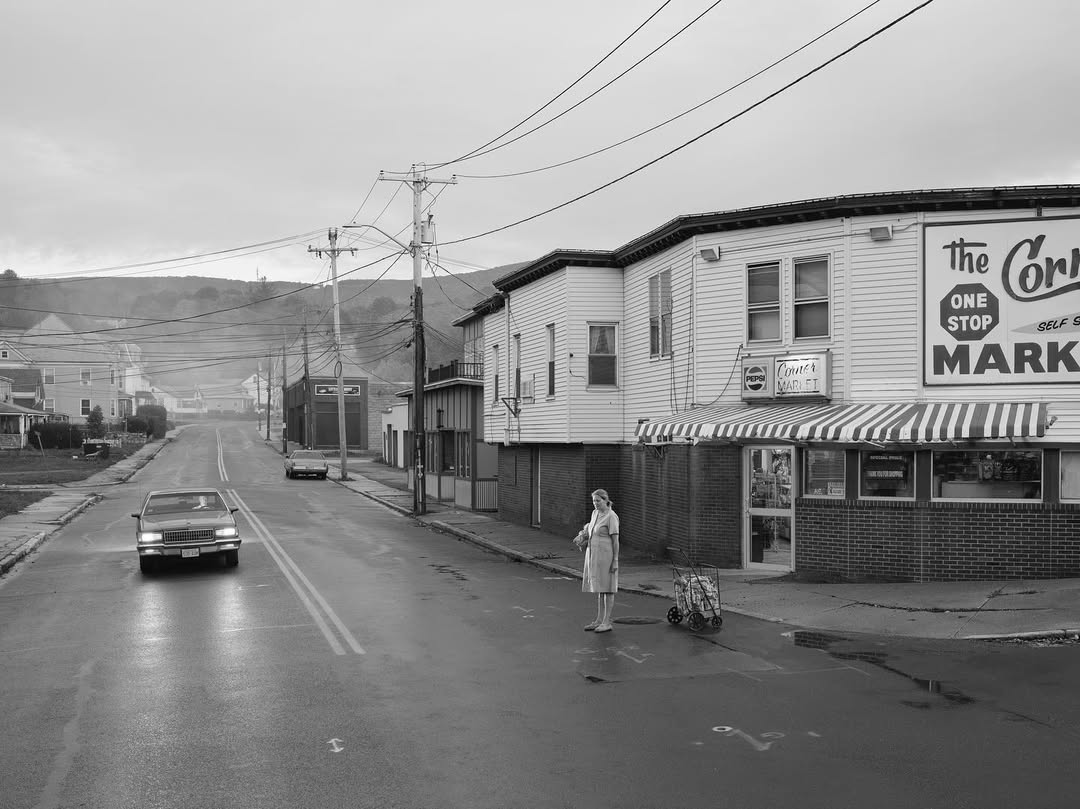
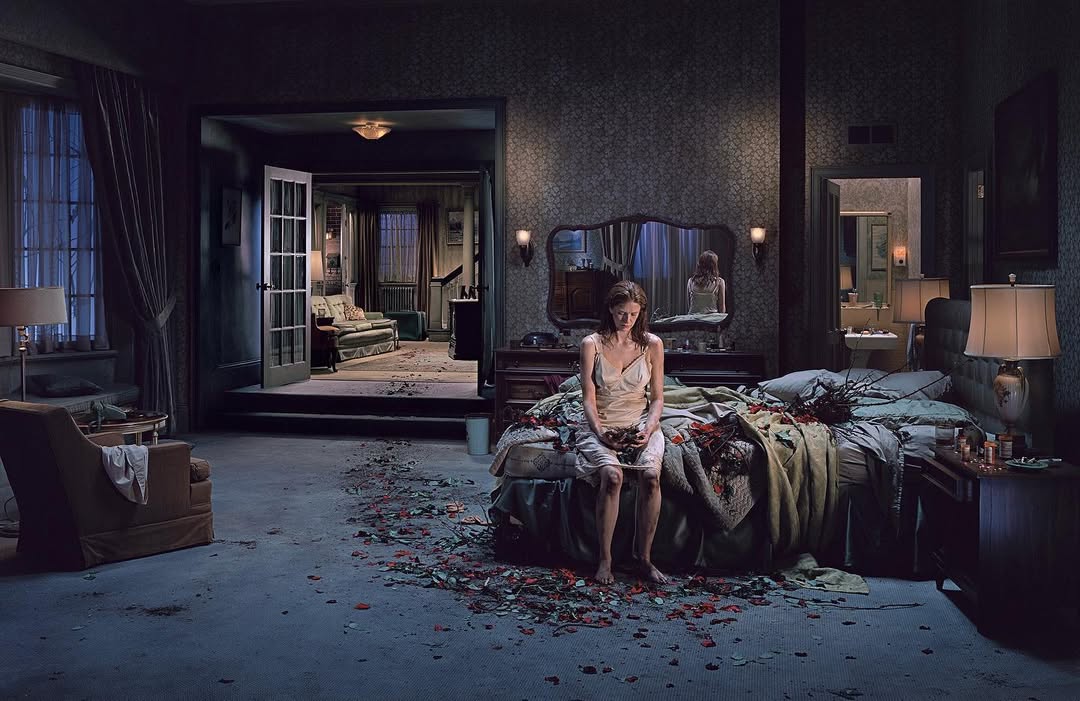
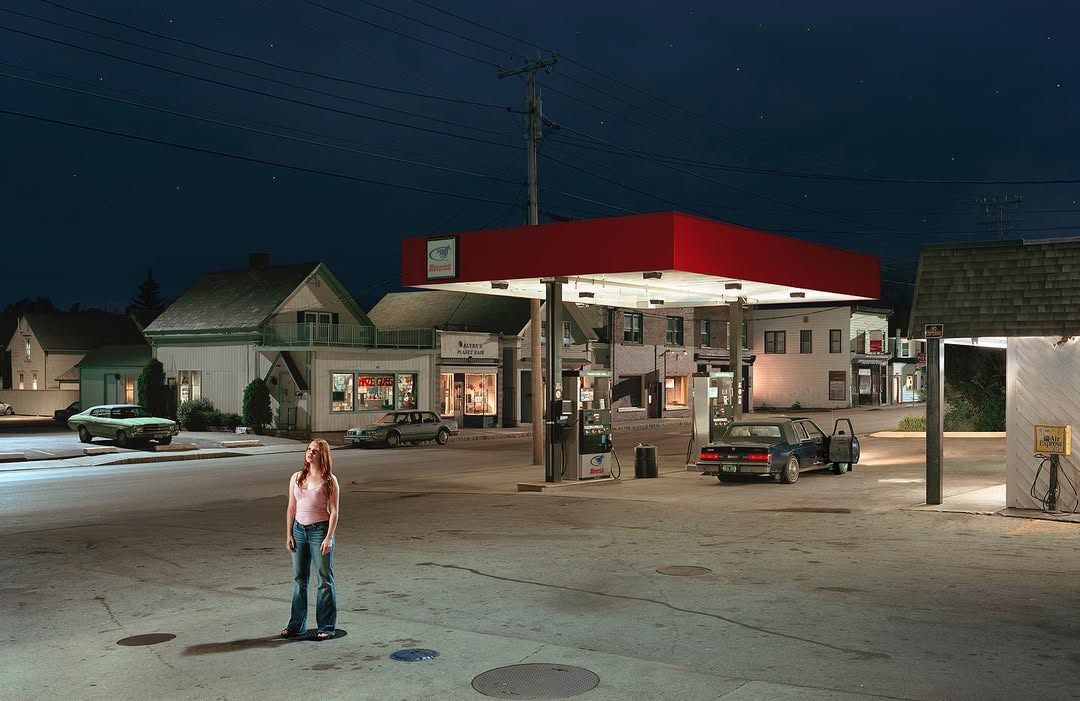
Gregory Crewdson was born in 1962 in Brooklyn, New York, and developed an early interest in photography after seeing a Diane Arbus exhibition at age 10. He earned a BA from SUNY Purchase in 1985 and an MFA from Yale School of Art in 1988, where he now serves as director of graduate studies in photography. His professional career began in the late 1980s, with early series like Natural Wonder in the 1990s marking his shift to staged, cinematic scenes. Key milestones include the series Twilight (1998-2002), Beneath the Roses (2003-2008), Cathedral of the Pines (2013-2014), and An Eclipse of Moths (2018-2020), alongside major retrospectives such as at the Albertina Museum in 2024. He bases his work in New York and Massachusetts, often shooting in small American towns. Visually, his images feature muted colours like blues and yellows, with high contrast from artificial lighting to create an eerie, dreamlike atmosphere. Textures such as wet surfaces or worn interiors add to the sense of unease in everyday settings.
- Primary Genres: Fine Art, Conceptual.
- Primary Photography Styles: Surrealism (cinematic staging with psychological tension for an uncanny feel); Narrative (storytelling through isolated figures and ambiguous scenes to evoke emotion).
- Key Message: Crewdson explores the undercurrents of American suburban life, using staged photographs to reveal moments of quiet alienation and mystery. His work blends the ordinary with the surreal to highlight emotional isolation and unspoken narratives.
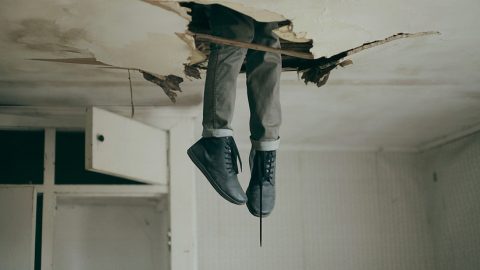
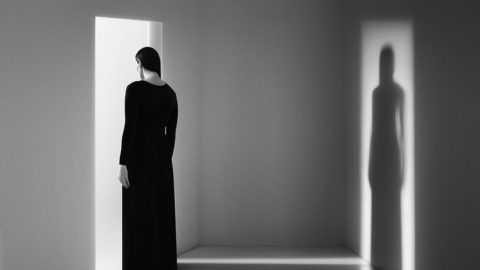
Crewdson’s common subjects include isolated figures in suburban or small-town American settings, such as people in homes, streets, or natural edges, often captured at twilight or in low light to emphasise solitude. His aesthetic centres on colour grading with desaturated tones, high contrast, and textures like rain-slicked roads or foggy windows, creating a film-like depth. Techniques involve large-format cameras, such as 8×10 view cameras, and cinematic production with crews using HMIs, softboxes, and generators for controlled lighting over multiple days. He incorporates props, fog machines, and location scouting in real towns to build authentic yet manipulated scenes. Editing uses Photoshop for compositing multiple exposures into seamless images, adjusting colour balance and haze without heavy alteration to maintain sharpness and mood. Presentations feature large-scale prints up to 2×3 metres in galleries, plus books like Beneath the Roses (2008) and exhibitions at institutions such as MoMA and the Guggenheim.
For intermediate photographers, Crewdson’s cinematic style combines digital tools with film-era precision, using large-format digital backs or film for high resolution, unlike faster digital snapshots. This approach mirrors the zone system in controlling exposure zones for tonal range, but digitally allows layering in post-processing to fine-tune shadows and highlights. Learners can study his lighting setups, where multiple sources create directional light for drama, teaching how to avoid flat natural light by adding artificial elements. His narrative composition encourages planning scenes like storyboards, focusing on subject placement to imply stories without explicit action. Crewdson’s method underscores collaboration, treating photography like film production to achieve scale beyond solo work. This inspires shifting from spontaneous captures to premeditated setups, applying techniques like layered editing to enhance mood in personal projects.
- Accolades:
- Skowhegan Medal for Photography
- National Endowment for the Arts Visual Artists Fellowship
- Aaron Siskind Foundation Fellowship
- Distinguished Artist Award, St. Botolph Club Foundation (2015)
- Trivia:
- As a teenager, he played in a punk band called The Speedies, whose song featured in a Hewlett-Packard advert.
- He struggled with dyslexia but found expression through visual storytelling.
- Each image can take weeks to months to produce, involving up to 100 crew members.
Lessons from this Photographer:
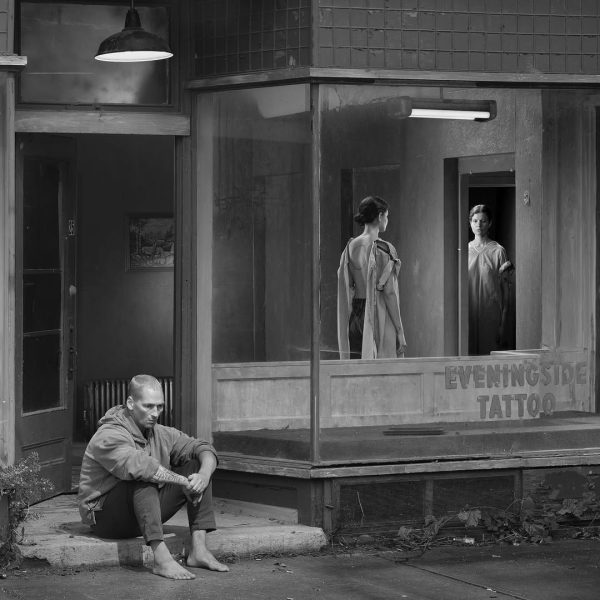
Crewdson’s unique approach lies in treating photography as cinematic production, teaching the importance of pre-visualisation and teamwork to craft narrative depth. Photographers can apply this by storyboarding scenes beforehand, using multiple light sources to control mood and guide viewer emotion, rather than relying on ambient conditions. His minimal post-processing after extensive setup encourages a mindset of precision in-camera, inspiring experimentation with staging everyday subjects to uncover hidden stories and foster a deeper craft appreciation.
Website and Portfolio:
YouTube References:
- “There But Not There: Gregory Crewdson Documentary” – https://www.youtube.com/watch?v=XNPwVLU38pc
Citations:
- Wikipedia: https://en.wikipedia.org/wiki/Gregory_Crewdson
- International Center of Photography: https://www.icp.org/browse/archive/constituents/gregory-crewdson
- Guggenheim: https://www.guggenheim.org/artwork/artist/gregory-crewdson
- Albertina Museum: https://www.albertina.at/en/exhibitions/gregory-crewdson/
- Interview with SCI-Arc Channel (2016): https://www.youtube.com/watch?v=3jLtNwPB9eY
- The New York Times (2016): https://lens.blogs.nytimes.com/2016/01/25/alone-in-a-crowd-with-gregory-crewdson/